The Catch Phase in Front Crawl: Where Speed Truly Begins
The catch is the moment your hand transitions from simply entering the water to actively holding it. It’s the first part of the underwater stroke, and it sets the tone for everything that follows. A strong catch doesn’t come from strength alone—it comes from precision, feel, and timing. When you master it, you create the foundation for an efficient, powerful pull that moves you forward with less effort and more speed.
This article builds on the principles from our body‑position guide, showing how a stable, aligned body allows the catch to work exactly as it should.
What the Catch Actually Is:
The catch phase begins just after the hand enters the water and extends forward. It ends when the elbow bends and the forearm becomes vertical. In simple terms: it’s the moment you “grab” the water.
A good catch creates purchase—a solid anchor point in the water that your body can move past. A poor catch slips, wastes energy, and forces the swimmer to work harder for the same speed.
The Three Pillars of an Effective Catch
1. Hand Entry That Sets You Up for Success
A clean entry makes the catch easier and more consistent.
- Enter in line with the shoulder, not crossing the centre line.
- Fingers first, wrist relaxed, palm facing down—not angled outward.
- Extend forward with purpose, not force. Over‑reaching or pressing down creates instability and delays the catch.
A quiet, controlled entry reduces bubbles and turbulence, giving you a clearer feel for the water as the catch begins.
2. Early Vertical Forearm (EVF): The Engine of Propulsion
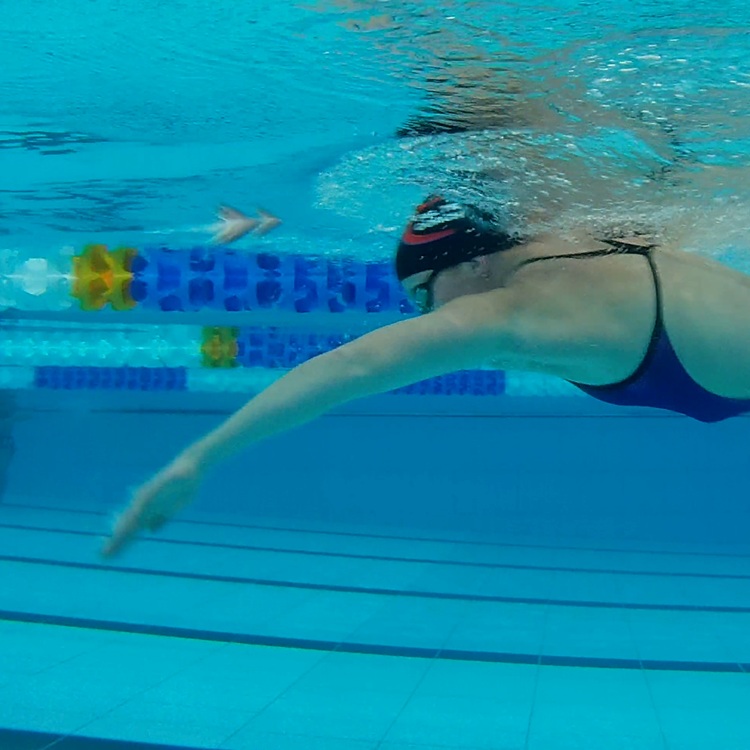
EVF is the gold standard of modern freestyle technique. It’s the moment your elbow stays high while your forearm rotates downward into a vertical position.
Why it matters:
It increases the surface area pushing water backwards.
It reduces shoulder strain by avoiding a dropped elbow.
It creates a longer, more effective pull phase.
Key cues:
- Keep the elbow high and slightly outward—not collapsing inward.
- Think of the fingertips tipping down first, not the whole arm.
- Imagine “stacking” the forearm vertically like a paddle.
This is where feel for the water becomes essential. EVF isn’t a forceful movement—it’s a controlled rotation that sets up the power phase.
3. Anchoring, Not Pushing Down
Many swimmers mistake the catch for a downward press. But pressing down lifts the body rather than propelling it forward.
- A correct catch feels like:
- The hand and forearm holding still in the water.
- The body moving past the anchored arm.
- Pressure directed backwards, not downwards.
Think of it as “setting the hook” rather than “pushing the water away.”
How Body Position Supports the Catch
Your catch can only be as good as the platform it’s built on. From the previous article:
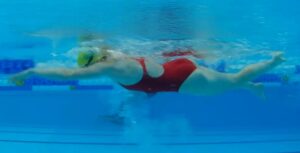
- A stable, horizontal body line reduces drag and keeps the shoulders in the right position to initiate EVF.
- Balanced rotation allows each arm to reach and catch without crossing over.
- A steady kick prevents the hips from dropping, which otherwise forces the catch to compensate.
When the body is aligned, the catch becomes smoother, stronger, and more repeatable.
Common Catch Mistakes (and How to Fix Them)
- Dropped elbow — Usually caused by over‑reaching or lack of rotation. Focus on fingertip‑first rotation and a relaxed shoulder.
- Pressing down — Think “backwards pressure,” not “downwards push.”
- Wide or sweeping catch — Keep the hand in line with the shoulder; avoid drifting outward.
- Tension in the wrist or hand — A relaxed hand feels the water better and anchors more effectively.
- Rushing the catch — Slow the front end of the stroke; speed comes from control, not haste.
Drills That Build a Better Catch
- Sculling (front and mid‑position) — Develops feel and awareness of forearm angle.
- Doggy paddle — Encourages EVF and eliminates the temptation to press down.
- Fingertip drag — Reinforces high elbows above the water, supporting high elbows below it.
- Single‑arm freestyle — Helps isolate the catch and improve rotation timing.
Each drill should be done slowly at first. Precision beats power every time.
Bringing It All Together
A great catch isn’t about muscling the water—it’s about shaping your arm into the most effective paddle and applying pressure in the right direction at the right moment.
When combined with strong body alignment and balanced rotation, the catch becomes the gateway to a smoother, faster, more efficient freestyle stroke.
Triathlon Training Week in Mallorca
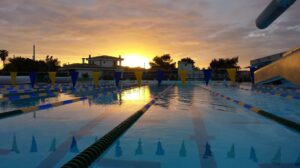 Looking to take your IRONMAN training into the real world? Join us in Colonia de Sant Jordi, Mallorca for an immersive triathlon experience that blends elite coaching with cinematic landscapes.
The Triathlon Training Camps in Mallorca offer a powerful environment for athletes of all levels. With expert-led sessions in swimming, cycling, and running—plus tailored mindset workshops—you’ll build confidence, endurance, and emotional clarity in every discipline.
- 🏊 Swim analysis in a world-class 50m pool and open water
- 🚴 Scenic rides through monastery climbs like Randa and San Salvador
- 🏃 Run technique and endurance on trails and a new 400m track
- 🧠 IRONMAN Coaching 1 coach to 8 athletes
Whether you're preparing for your first IRONMAN or chasing a breakthrough season, this camp is your launchpad.
Train hard. Think deeper. Leave transformed.
 Train Your Mind. Transform Your Race. Join F4L.
Triathlon isn’t just a test of physical endurance. It’s a mental crucible. The athletes who thrive aren’t just the fastest—they’re the ones who know how to stay calm in chaos, grounded in discomfort, and focused when everything else is trying to pull them off course.
That’s why mindset matters. And why F4L Triathlon Coaching is built around more than just metrics and mileage. We coach the whole athlete—body, mind, and spirit. Whether you’re chasing a personal best, your first finish line, or simply want to feel more confident in your training, F4L offers a coaching experience rooted in stoic principles and emotional intelligence. We help you:
- Focus on what you can control
- Prepare for the unexpected
- Embrace the journey
- Build resilience through discomfort
- Stay present in every moment
- Keep perspective when it counts
- Show up and do the work
This isn’t just theory—it’s how we train. Every session, every plan, every conversation is designed to help you become the kind of athlete who doesn’t just endure, but evolves.
If you’re ready to train smarter, race stronger, and think clearer—join us.
👉 Sign up for F4L Triathlon Coaching and start building the mindset that lasts