IRONMAN Bike Pacing: Why the Bike Leg Is Where Races Are Lost
Ask any experienced IRONMAN athlete where their race fell apart, and nine times out of ten, the answer isn't the swim.
It isn't even the run.
It's the bike.
More specifically, it's the first half of the bike — when everything feels easy, the legs are fresh, and the temptation to push hard is almost irresistible.
This is where IRONMAN dreams quietly unravel.
The short answer on IRONMAN bike pacing: for most age-group athletes, target power should sit at 65–72% of your Functional Threshold Power (FTP). Going harder than this in the first half almost always results in a significantly slower — and far more painful — marathon. The goal of your IRONMAN bike leg is not to go as fast as possible. It is to arrive at T2 ready to run.
Why the Bike Leg Is Your Most Important Discipline
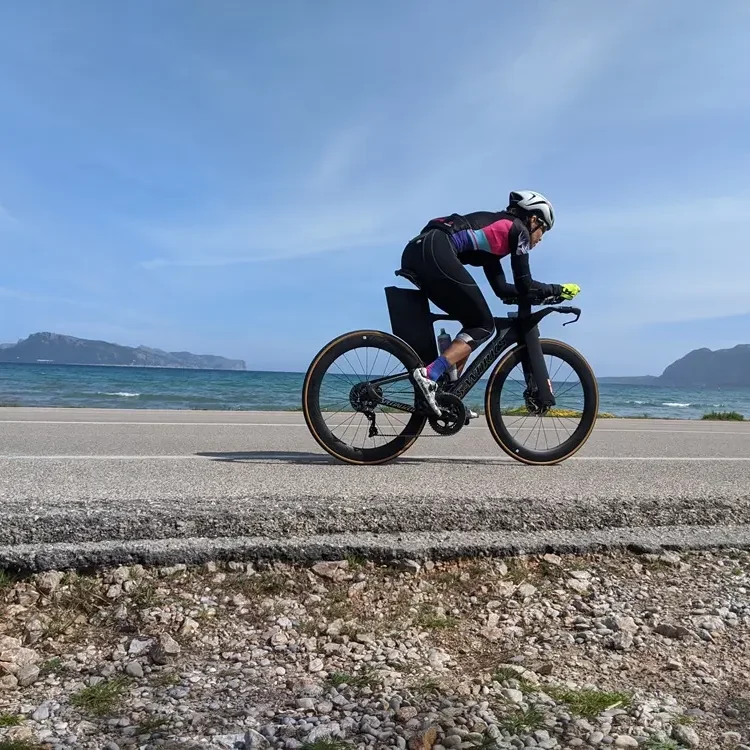
The bike leg in a full IRONMAN is 180 kilometres. That's roughly 5–6 hours for most age-group athletes. It is, by a significant margin, the longest discipline you will face on race day.
And yet athletes consistently under-prepare for it tactically.
They train hard. They clock the miles. They do the long rides.
But on race day, they go out too hard, too early — and arrive at T2 with nothing left.
What follows is a marathon that becomes a survival shuffle. Not a race.
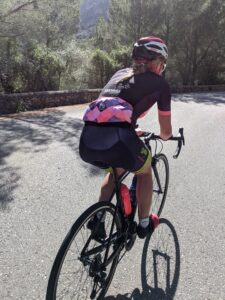 Why IRONMAN Athletes Get the Bike Pacing Wrong
There are three classic errors that destroy bike legs — and therefore destroy runs.
1. Racing by feel in the first 60 km
The early kilometres feel deceptively comfortable. Your heart rate is settled, adrenaline is high, and your body hasn't yet told you the truth about the effort you're putting out.
So athletes push. They chase riders ahead. They surge on the climbs. They feel strong — and they are strong, in that moment.
But they're borrowing from the run. Every extra watt in the first two hours costs you exponentially more in the final two hours — and on the marathon that follows.
2. Ignoring nutrition until it's too late
The bike is where your race-day nutrition strategy either works or falls apart completely.
Many athletes undereat in the first half — either because they're focused on riding, or because they simply don't feel hungry yet. But by the time hunger or fatigue signals arrive, you're already behind.
You cannot catch up on a calorie deficit at hour four of a bike leg. The damage is already done.
3. Riding someone else's race
Triathlon is a notoriously difficult sport for pacing discipline because you are surrounded by athletes going different speeds for completely different reasons.
The rider who overtakes you at kilometre 40? They may be racing a 70.3. They may be going too hard and will pay for it later. They may simply be faster than you.
None of those scenarios mean you should match them.
Your race. Your power. Your plan.
What Smart IRONMAN Bike Pacing Does to Your Run
This is the most important performance insight in triathlon, and it's one that most self-coached athletes never fully internalise.
Athletes who execute a controlled, even-effort bike leg — particularly in the first half — consistently run significantly better off the bike.
The difference can be 15–25 minutes on the marathon. Because of a decision made at kilometre 30 on the bike.
Fifteen to twenty-five minutes. On the run.
That is the power of correct IRONMAN bike pacing.
How to Use Power to Pace Your IRONMAN Bike Leg
Use a power meter — and know your numbers
If you are racing IRONMAN without a power meter, you are navigating without a map.
Heart rate responds too slowly to be useful in real time. Speed varies too much with terrain and wind. Power is the only metric that tells you, in that precise moment, exactly how hard you are actually working.
Your IRONMAN bike pacing target:
- Full IRONMAN: 65–72% of FTP
- IRONMAN 70.3: 75–80% of FTP
At kilometre 30, riding at 68% of FTP will feel easy. That feeling is not a problem. That feeling is the plan working.
If you don't have a power meter, train yourself to connect your effort to a Rate of Perceived Exertion (RPE). IRONMAN bike effort should feel like a 5–6 out of 10. Controlled. Sustainable. Almost uncomfortably conservative early on.
IRONMAN Bike Pacing: The Three-Thirds Strategy
Think of your bike leg in three distinct phases:
First third — Discipline Ride conservatively. Be honest with yourself. If you feel too good, you are probably going too hard. Let riders go. Trust the plan. This is where races are most commonly ruined.
Second third — Settle and fuel Maintain consistent power. Fuel consistently every 20–25 minutes. This is the engine room of your race. Stay calm, stay steady, stay on your nutrition plan.
Final third — Controlled intent If you have paced well, the final third is where you can apply a little more controlled pressure. Not explosively — but with purpose. This is when you begin to pass the athletes who went too hard early. And you will pass them.
Most age-group athletes do the exact opposite. They push the first third and merely survive the last.
IRONMAN Nutrition on the Bike: The Rules
Pacing and nutrition are inseparable on the bike leg. Get one wrong and the other suffers.
- Eat on a schedule, not by instinct. Set a timer for every 20–25 minutes.
- Target 60–90g of carbohydrate per hour, adjusted for your body size and gut tolerance.
- Test everything in training. Never use a new product or strategy on race day.
- Hydrate proactively. On a warm day, thirst is already a sign you are behind.
The bike is where your body either builds reserves or depletes them. A well-fuelled final third on the bike creates a well-fuelled start to the run. There is no shortcut.
The Final 10 km: Preparing Your Legs for the Run
Your last 10 kilometres on the bike should be a deliberate, gentle reduction in effort.
Wind down. Ease off. Prepare mentally and physically for the transition.
Athletes who arrive at T2 in control — calm, hydrated, with legs that still have life in them — run considerably better than those who skid in with their heart rate spiking and their muscles screaming.
T2 is not just a changeover. It is the beginning of your marathon. Treat it accordingly.
The Mental Side of IRONMAN Bike Pacing
Here's the truth that experienced IRONMAN athletes understand:
Riding at the correct IRONMAN bike power feels too easy for the first hour.
That feeling is the enemy.
The discipline to hold back — to let riders go, to trust the numbers, to resist the need to prove something in the first 60 km — is one of the hardest skills in triathlon. And it is absolutely a skill. One that is trained, coached, and rehearsed.
Athletes who master it don't just have better races. They have more consistent races — because they are executing a strategy, not reacting to how they feel in the moment. This connects directly to the idea of process goals, which we cover in Process Goals for Endurance Athletes
The run tells you everything about how well you paced the bike.
A strong, progressive marathon? You nailed IRONMAN bike pacing.
A walk-run shuffle from kilometre 15? Open your power file and look at what you were doing in the first hour.
What This Means for Your Training
If you want to race your best bike leg, your training must reflect that intention:
- Long rides at race-effort power — not comfortable spins, not all-out efforts
- Brick sessions that connect bike pacing to run feel, so your body learns the connection
- Nutrition rehearsed on every long ride — not just on race day
- Power data reviewed and discussed with your coach regularly, not just glanced at after the fact
The bike leg does not reward the strongest rider. It rewards the smartest one... and that's explored in detail in Why Most IRONMAN Athletes Plateau
The Bottom Line
IRONMAN races are not won on the bike.
But they are absolutely, consistently lost there.
If you want to run the way you have always imagined — controlled, strong, and with something still in reserve — it begins with the discipline to ride your own race, at your own power, on your own terms.
That takes structure. It takes data. And it takes a coach who helps you understand not just what to do, but why it matters — and what it should feel like when you get it right.
That is what F4L Triathlon Coaching is built for.
Frequently Asked Questions: IRONMAN Bike Pacing
What power should I ride at for an IRONMAN? For a full IRONMAN, target 65–72% of your Functional Threshold Power (FTP). For an IRONMAN 70.3, aim for 75–80% of FTP. These figures assume you want to run well off the bike, which for most athletes is the primary goal.
Why do I run badly off the bike in triathlon? The most common reason is riding too hard in the first half of the bike leg. Excess effort early on depletes glycogen stores and accumulates fatigue in the legs that cannot be recovered during the ride. By the time you reach T2, the damage is already done — and it shows on the run.
What is the best IRONMAN bike pacing strategy? The most effective IRONMAN bike pacing strategy is a controlled, even-effort approach — particularly in the first third. Divide the bike into thirds: conservative early, steady in the middle, and slightly more purposeful in the final section if you have paced correctly. Riding to power targets using an FTP-based percentage is the most reliable way to execute this.
Should I use a power meter for IRONMAN? Yes — a power meter is the single most effective tool for IRONMAN bike pacing. Heart rate responds too slowly and speed varies too much with terrain. Power gives you immediate, accurate feedback on your effort regardless of wind, gradient, or fatigue. If you don't have a power meter, train yourself to connect your effort to a consistent RPE (Rate of Perceived Exertion) during your long rides.
How does bike pacing affect the IRONMAN run? Significantly. Athletes who execute a controlled bike leg — especially in the first half — consistently run 15–25 minutes faster than those who go out hard and fade. The run does not happen in isolation. It is the direct result of every decision made over the previous 5–6 hours on the bike.
What should I eat on the IRONMAN bike leg? Target 60–90g of carbohydrate per hour, taken on a 20–25 minute schedule — not by instinct or when you feel hungry. Everything you use on race day should be tested thoroughly in training. Never introduce new nutrition products on race day.
Ready to stop surviving the bike leg and start racing it? Get in touch with F4L Triathlon Coaching and let's build a plan around your goals.
Paul Jones is a British Triathlon Level 3 Coach and IRONMAN Certified Coach, and founder of F4L Triathlon Coaching. Based in the North East of England, Paul coaches athletes of all levels from first-time triathletes to IRONMAN finishers.
 Train Your Mind. Transform Your Race. Join F4L.
Triathlon isn’t just a test of physical endurance. It’s a mental crucible. The athletes who thrive aren’t just the fastest—they’re the ones who know how to stay calm in chaos, grounded in discomfort, and focused when everything else is trying to pull them off course.
That’s why mindset matters. And why F4L Triathlon Coaching is built around more than just metrics and mileage. We coach the whole athlete—body, mind, and spirit. Whether you’re chasing a personal best, your first finish line, or simply want to feel more confident in your training, F4L offers a coaching experience rooted in stoic principles and emotional intelligence. We help you:
- Focus on what you can control
- Prepare for the unexpected
- Embrace the journey
- Build resilience through discomfort
- Stay present in every moment
- Keep perspective when it counts
- Show up and do the work
This isn’t just theory—it’s how we train. Every session, every plan, every conversation is designed to help you become the kind of athlete who doesn’t just endure, but evolves.
If you’re ready to train smarter, race stronger, and think clearer—join us.
👉 Sign up for F4L Triathlon Coaching and start building the mindset that lasts