 When choosing a triathlon race bike, the order of priority is: bike fit, an aero position you can hold, a frame that matches your fit, wheels and tyres, then the groupset.
Your body creates most of the drag, so a comfortable, sustainable position is worth more than an expensive frame.
If it is your only bike or you are new to the sport, buy a road bike and add clip-on aerobars. A dedicated triathlon bike makes sense as a second bike for middle and full distance racing.
Get a professional bike fit before you buy, then shop using your stack and reach numbers.
Autumn is when triathletes start looking for a new triathlon race bike. The season's done, next year's race is booked, and the internet is full of very fast-looking machines with very large price tags.
Before you spend a penny, here's the order I'd think about it in. It isn't the order the adverts would like you to.
Road bike or triathlon bike: which should you buy?
A triathlon (TT) bike puts you in a lower, narrower position on aerobars with a steeper seat angle, which is faster on flat and rolling courses and leaves your legs a bit fresher for the run. A road bike handles better, climbs more comfortably, is easier to ride in a group and is far more versatile for training.
If this is your only bike, or you're in your first couple of seasons, buy a good road bike and add clip-on aerobars. If you already have a road bike and you're targeting middle or full distance racing, a TT bike is a worthwhile second bike. Check your race too: draft-legal events require a road bike, and a very hilly or technical course can favour one.
1. Bike fit comes before everything
The best bike in the world is slow if you can't hold the position. Fit is the single most important factor, and it should come before you choose the bike, not after.
Book a session with a reputable bike fitter before you buy. A good fitter will work out your ideal position and give you your stack and reach numbers, which tell you which frames and sizes will actually suit you. It typically costs a small fraction of the bike and stops you making an expensive mistake. Buying a frame because it was on offer and then trying to make your body fit it is the wrong way round.
2. Your aero position
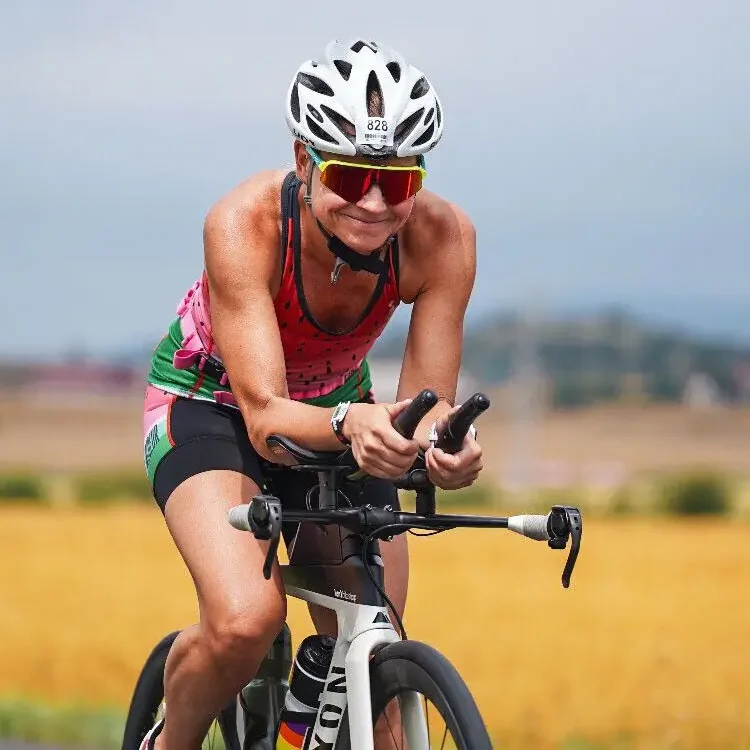
Your body creates the large majority of the drag, far more than the bike does. So the position you can hold matters more than the frame you're sitting on.
The key word is hold. A position that looks fantastic in a photo but has you sitting up after 40 minutes is slower than a slightly higher one you can stay in for the whole ride. For long course especially, aim for a position that's comfortable, lets you breathe and eat, and still lets you run well afterwards. Look for a front end with plenty of adjustment in pad height, width and extension angle, because your position will change as you adapt.
 3. The frame: what to look for
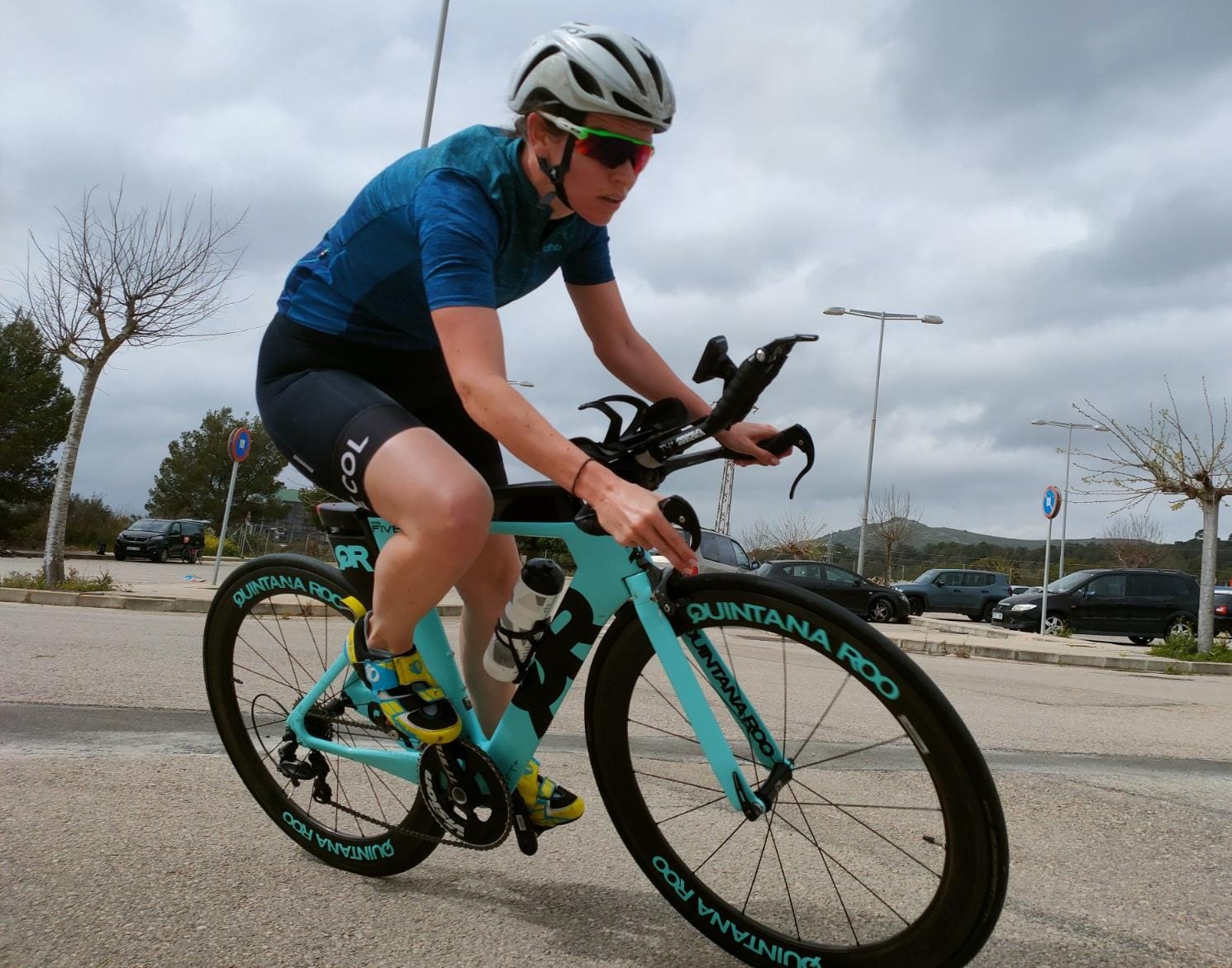
Most race bikes are carbon, and at any given price the frames from the major brands are closer in performance than the marketing suggests. What's worth checking:
Geometry. Does it match the numbers from your fit? This matters more than the badge.
Adjustability. Highly integrated front ends look clean but can be awkward to adjust and to pack. Make sure you can get to your position without custom parts.
Storage and hydration. For long course, built-in fuel boxes and hydration save you taping gels to the top tube.
Brakes. Disc brakes are now standard on new bikes and stop far better in the wet. Rim brake bikes are still perfectly good and are where the second-hand bargains are.
Travel. If you'll fly to races, check how easily the cockpit comes apart to go in a bike box.
4. Wheels and tyres
After position, wheels are the upgrade you'll notice most. Many bikes come with basic training wheels, so budget for this or look for a package that includes a decent set.
A mid-depth carbon wheel of roughly 45 to 60mm is a sound all-round choice: properly quick, but manageable in a crosswind. Lighter riders and anyone racing somewhere exposed may prefer shallower at the front. Disc wheels are fast but are banned at some windy races, so check first.
Don't overlook tyres. A good-quality, fast-rolling tyre in a 25 to 28mm width, set up at the right pressure, is one of the cheapest ways to gain speed. Tubeless is worth considering for the lower rolling resistance and puncture protection.
 5. The groupset and gearing
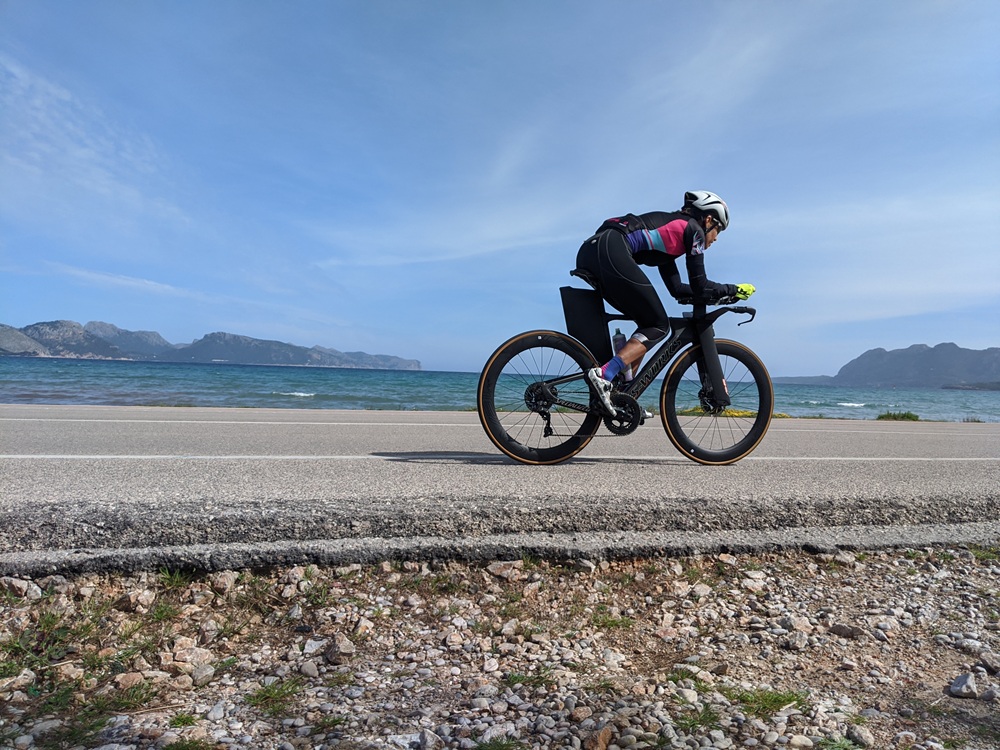
This is where people overspend. Mid-range groupsets such as Shimano 105 and Ultegra or SRAM Rival and Force shift and brake superbly. The top tier saves a little weight and costs a lot more.
Two things do matter. Electronic shifting is a real benefit on a TT bike, because you can change gear from both the aerobars and the brake levers. And gearing needs to suit your course and your strength: there's no shame in an easier bottom gear if it keeps you spinning up the climbs with something left for the run. Ask your fitter about crank length as well, since shorter cranks can help open up your hips in the aero position.
Where to buy a triathlon bike
Your bike fitter. Start here. Many fitters will recommend specific models and sizes from your numbers.
A good local bike shop. You'll pay a little more, but you get sizing help, a proper build and someone to go back to when something needs sorting.
Direct-to-consumer brands. Brands such as Canyon and Ribble sell online and often give you more for your money. The trade-off is that you need to be confident about sizing and happy to do some assembly.
End-of-season and ex-demo deals. Autumn and winter are when last year's models get discounted. Usually the only change is the paint.
Second-hand. Triathlon bikes are often lightly used and lose value quickly, so there are bargains on club forums, eBay and Facebook Marketplace. Check the frame carefully for damage, ask for proof of purchase, and factor in the cost of a service.
Cycle to Work schemes. If your employer offers one, it can take a meaningful chunk off the cost.
 If the budget is tight, spend it in this order
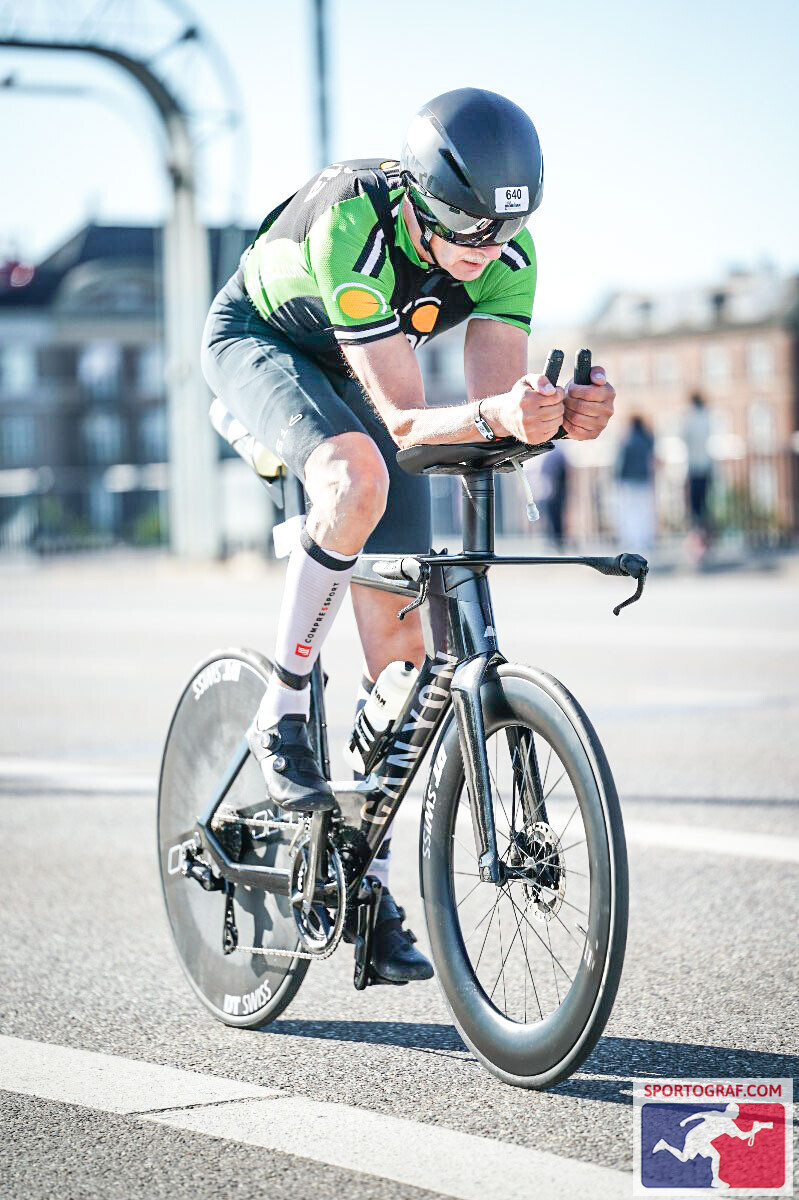
Bike fit first. Then a frame that fits. Then tyres and wheels. Then an aero helmet and a well-fitting tri suit, both of which are worth more speed per pound than almost anything you can bolt on. The groupset comes last.
And remember that no bike makes up for the training. The engine is still the most important part.
Frequently asked questions
Do I need a triathlon bike for my first triathlon?
No. A road bike is ideal for your first few seasons and is more versatile for training. Clip-on aerobars give you much of the benefit for a fraction of the cost. A dedicated triathlon bike makes most sense once you're racing middle or full distance regularly.
What is the most important thing when buying a triathlon bike?
Fit. A bike that matches your body and lets you hold a comfortable aero position will be faster than a more expensive bike that doesn't fit. Get a professional bike fit before you buy and choose a frame to match your measurements.
Is a triathlon bike faster than a road bike?
Are deep-section wheels worth it for triathlon?
Yes, they're one of the most noticeable upgrades after your position. A mid-depth wheel of around 45 to 60mm suits most athletes and conditions. Pair them with good tyres at the correct pressure.
Should I buy a new or second-hand triathlon bike?
Second-hand can be excellent value, as triathlon bikes are often lightly used. Make sure the size matches your bike fit, inspect the frame for damage and budget for a service.
Not sure which way to go?
Choosing the right bike is a lot easier when you know what your race demands and where your own strengths lie. That's part of what I help my athletes with. If you're planning a big race for 2027 and want a coach in your corner, get in touch here. And if you'd like to learn how to handle your new bike properly, our Mallorca training camp in April starts the week with bike skills.
Why a Coached Training Camp Changes the Game
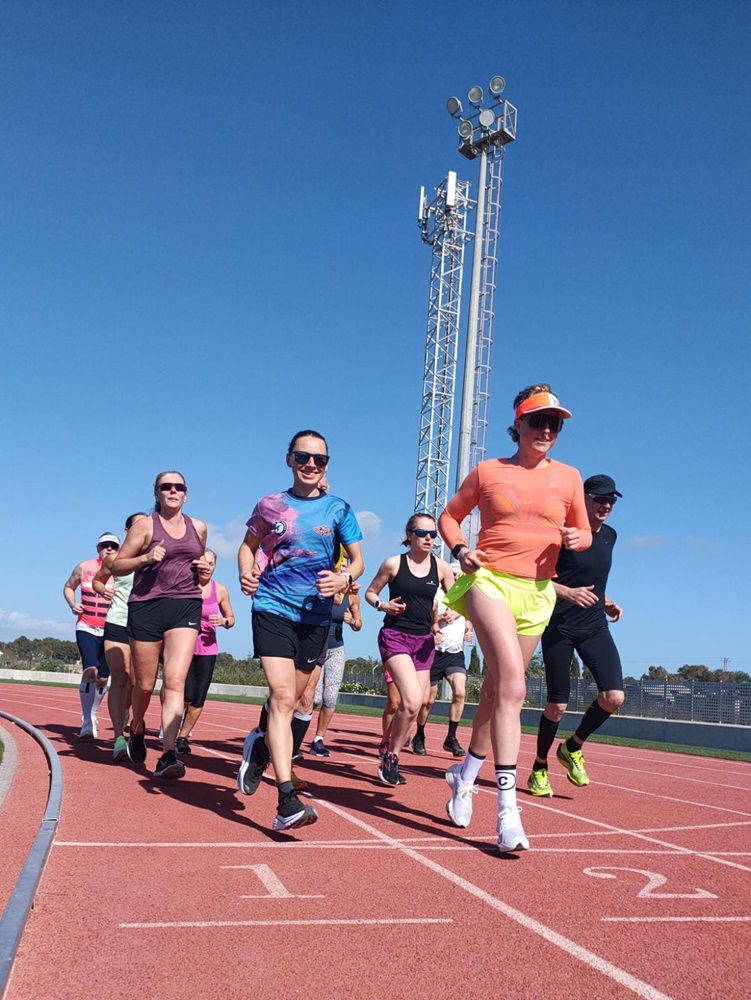
Anyone can book a week in the sun and ride their bike. What moves you forward is having a coach watching you do it.
That's what you're paying for on our camp. The week starts with bike skills and swim video analysis, so we know exactly what each athlete needs to work on before the real training begins. From there, every session is coached: poolside feedback as you swim, individual work on the faults the video picked up, guidance on the climbs and descents, and transition practice until it's second nature. Every drill has a clear purpose, and you'll be told why you're doing it. We pick the two or three changes that will make the biggest difference to you, rather than burying you in everything that could be better.
It works for mixed abilities too, because the coaching is aimed at the individual and not the group:
"The coaching team were always approachable and made me feel as if I was getting 1 to 1 coaching at all times even though it was a mixed ability group, they explained why I was struggling in certain areas and how to correct it with every drill having a clear objective."
Add warm weather, quality open water swimming, proper hills and no distractions from work, and you get a week of coached training that's almost impossible to replicate solo through a British winter. You go home fitter, and you go home knowing what to work on and how to fix it.
Our next Mallorca training camp runs 17–24 April 2027 in Colonia de Sant Jordi, from £1,099pp, with a £250 deposit to secure your place. Timed right after a winter of proper base building, it's the ideal springboard into race season for anyone building towards a 2027 IRONMAN.
Where Coaching Makes the Difference
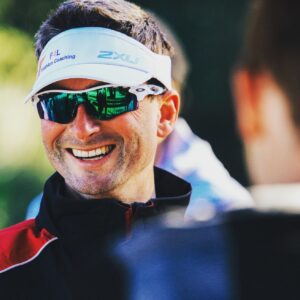
I've spent over 20 years coaching triathletes, and the plans that work aren't generic ones pulled off a shelf. My job is to help people achieve the impossible — their goals, their ambitions — whether that's getting to a first triathlon finish line or chasing a Kona qualification, built around training that fits real life: family first, work second, training third, and still gets you to the start line in the shape of your life.
I'm a British Triathlon Level 3 and IRONMAN Certified Coach, also holding Triathlon Australia Performance Coach and Certified Biomechanics Coach credentials — so whatever stage you're at, the plan in front of you is built on what actually works, not what looks good on paper.
Start Now, Not in March
If 2027 is your IRONMAN year, the work starts now — not when the weather turns. Get in touch about 1-2-1 coaching with F4L, or secure your place on the 2027 Mallorca training camp and give your off-season a proper finish line of its own.