 A first triathlon training camp is not a test of how fit or fast you are. It is a week of coached training in ability groups, and beginners often gain the most.
What separates a real camp from a training holiday is the coaching: how much of it you get, and how good it is. On our Mallorca camp that means swim video analysis, real-time poolside feedback, bike skills coaching, coached rides and runs, and transition practice, delivered by a minimum of three qualified coaches at a ratio of one coach to eight athletes.
The next camp runs 17–24 April 2027 in Colonia de Sant Jordi, Mallorca.
Every year I get the same message from someone thinking about their first triathlon training camp. It goes something like: "I'd love to come, but I'm not fast enough. I'll hold everyone up."
I understand it. You picture a week of lean, tanned athletes on expensive bikes disappearing up a mountain while you're left at the bottom. That isn't what a well-run camp looks like, and it's the main thing stopping people from booking a week that would do them a lot of good.
How much coaching do you get on a triathlon training camp?
This is the question to ask before you book any camp, because it's the difference between a coached week and a cycling holiday with a pool. Plenty of trips will give you sunshine and a route map. That's not coaching.
On our Mallorca camp the coaching is the whole point. You're coached in the pool, in the sea, on the bike, on the run and in transition, by a team of at least three coaches, with a ratio of one coach to every eight athletes. That means nobody is trying to watch a whole lane or a whole peloton on their own, and nobody gets lost at the back. I lead that team as a British Triathlon Level 3 coach, IRONMAN Certified Coach, Triathlon Australia Performance Coach and Certified Biomechanics Coach, with more than 20 years of coaching behind me.
Here's what that looks like across the week:
Swim video analysis. You're filmed early in the week, and we go through the footage with you so you can see exactly what your stroke is doing and why.
Individual follow-up. You then work on your own faults in the sessions that follow.
Poolside feedback in real time. Corrections as you swim, length by length, not a summary at the end.
Bike skills coaching. Handling, cornering, descending and group riding, taught properly at the start of the week before the bigger rides.
Coached rides and runs. Coaches out with each ability group, giving advice on pacing, gearing, climbing and technique as you go.
Transition practice. Coached, repeated, and tidied up until it's quick and calm.
Time to ask. The coaches are around all week, at sessions and at dinner. Bring your questions about training, racing, nutrition and kit.
A 1:8 ratio is what makes individual feedback possible. In a group that size a coach can watch you properly, spot what needs changing and come back to check you've fixed it.
Two things matter as much as the quantity. Every drill has a clear purpose and you'll be told what it is. And we focus on the few changes that will make the biggest difference to you, so you leave with a short list you can act on.
“The coaching team were always approachable and made me feel as if I was getting 1 to 1 coaching at all times even though it was a mixed ability group, they explained why I was struggling in certain areas and how to correct it with every drill having a clear objective.” — Paul, Mallorca camp
“Paul and his coaching team were always on hand to offer advice or assistance and I highly recommend them.” — Anita, Mallorca camp
“Dynamic coaching team that really complemented each other.” — Ellen, Mallorca camp
 Common worries about a first triathlon training camp
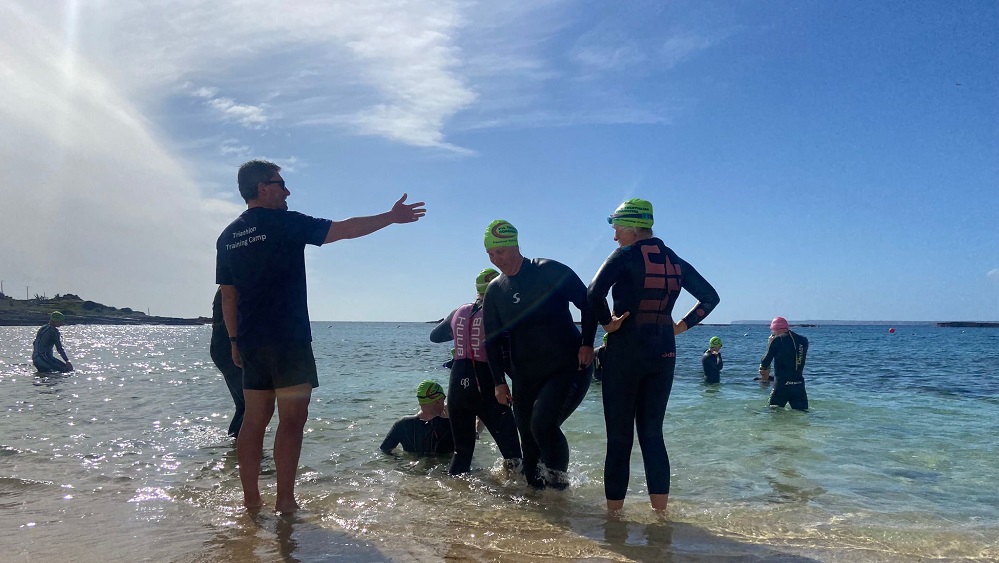
With that much support around you, most of the fears people have about a first camp don't survive the first morning. Here are the ones I hear most often.
"I'm not fit enough"
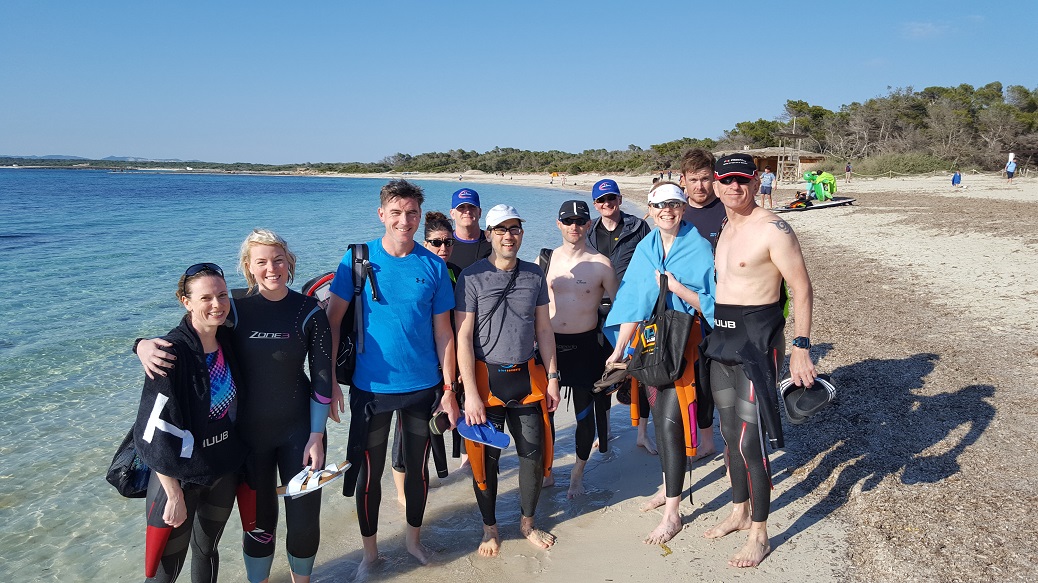
A training camp isn't a race. Nobody is timing you and nobody gets a prize for being first back to the hotel. Good camps split into ability groups, so you ride and run with people at your level and the session is pitched to suit you.
You also don't need to arrive in peak shape. The point of the week is to build fitness, so turning up with a sensible winter of steady training behind you is plenty.
“Great fun & fantastic for ALL levels of ability, whether you're training for your first triathlon or an experienced triathlete looking to improve your times.” — Wendy, Mallorca camp
"My swimming is terrible"
Then a camp is exactly where you should be. Swimming is the most technical of the three sports and the hardest to fix on your own, because you can't see what you're doing.
That's why we film you early in the week. Seeing your own stroke on screen, with a coach explaining what's happening and why, usually achieves more in twenty minutes than months of lengths. We then pick the two or three changes that matter most and work on those, rather than handing you a list of fifteen faults.
“A real positive for me was focusing on a number of key things, rather than overloading me with everything that's incorrect. Already feeling more in control / quicker in the pool.” — John, Mallorca camp
"I won't cope with that much training"
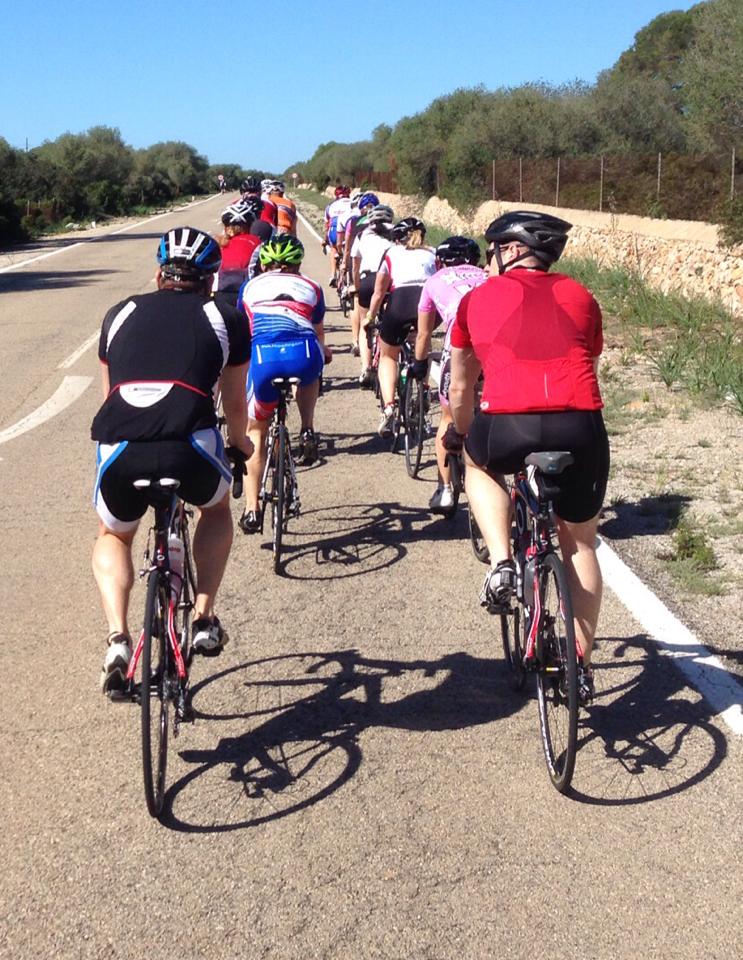 You'll do more than you do at home, and that's the idea. But it's a lot easier than you'd think, because everything else has been taken away. No commute, no meetings, no school run, no cooking. You train, eat, rest and sleep. Most people are surprised by how well their body handles it.
The week is structured, with easier sessions and recovery built in, and nothing is compulsory. If you need to sit a session out with a coffee, sit it out. Knowing when to back off is part of what you learn.
"I'm nervous in open water"
Most people are, at first. The sea in Mallorca is a kind place to get over it: clear, calm, warm enough in spring, and you can see the bottom. With coaches alongside you and a group around you, it's about as far from a cold, murky British lake in May as you can get.
Do a few relaxed sea swims in April and your first open water race of the season feels very different.
"I'm coming on my own"
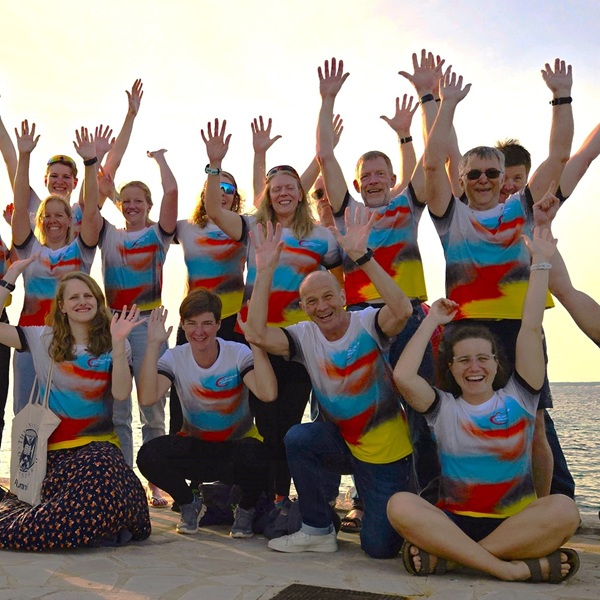
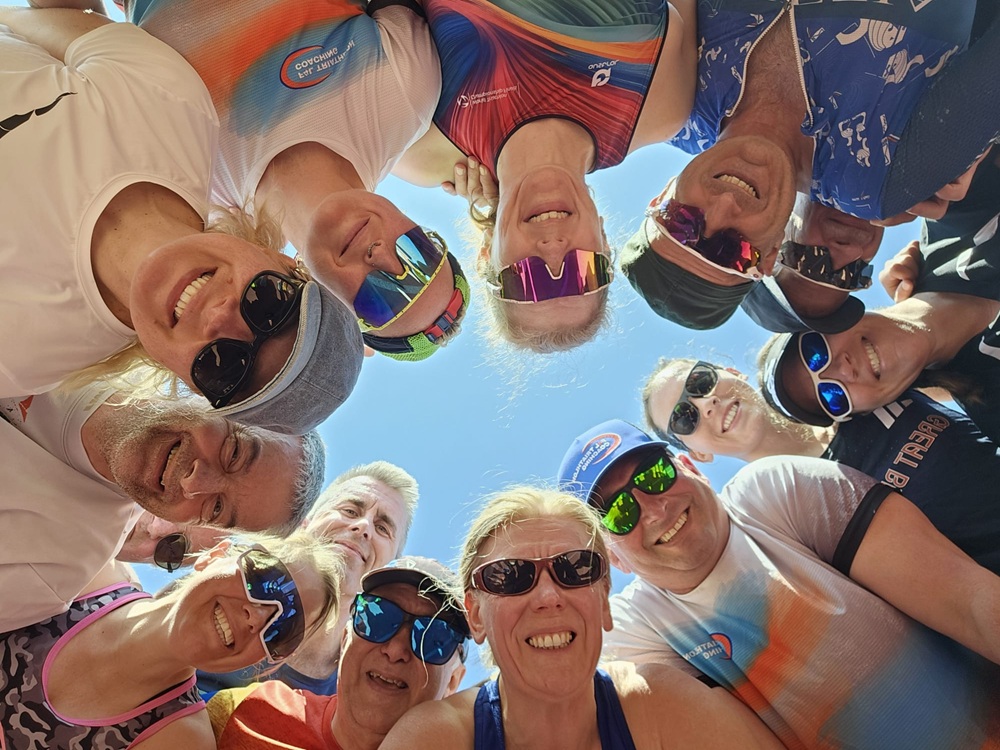
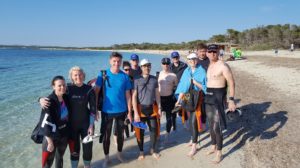
So do plenty of others, and it rarely stays that way beyond the first evening. You've all got the same thing in common, you're eating together every night, and by midweek the group has usually got its own running jokes. A lot of our athletes come back the following year to train with the people they met.
“Thank you so much to you guys, I know I was a nervous wreck. You helped me so much that week. You've pushed me out of that beginner comfort zone, what I really needed!” — Nina, Mallorca camp
What do you take home from a coached training camp?
Fitness, obviously. A solid week of warm-weather training in spring sets up the whole season. But the bigger gains tend to be the ones you can't see on a graph:
Skills. Cornering, descending, group riding, sighting in open water, a quicker transition.
Clarity. You know what your weaknesses are and exactly how to work on them.
Confidence. You've done back-to-back days, swum in the sea and climbed proper hills. Race day stops being a step into the unknown.
People. Training partners and friends you'll see at races for years.
 How to get the most from your first camp
Arrive rested. Don't cram in a big week beforehand. Come fresh.
Get your bike serviced. New tyres, working gears, brakes checked. Don't let a mechanical cost you a day.
Start steady. The athletes who hammer day one are usually the ones struggling by day four.
Eat more than you think you need. You're training far more than normal. This is not the week to cut back.
Ask questions. You've got coaches on hand all week. Use them.
Frequently asked questions
How much coaching do you get on a triathlon training camp?
It varies widely, so ask before you book. On a properly coached camp, every session is led by qualified coaches and includes individual feedback. The F4L Mallorca camp includes swim video analysis, real-time poolside feedback, bike skills coaching, coached rides and runs in ability groups, and transition practice, delivered by a minimum of three coaches at a ratio of one coach to eight athletes, led by head coach Paul Jones.
What is a good coach-to-athlete ratio on a triathlon training camp?
Look for around one coach to eight athletes or better. At that ratio a coach can watch each athlete individually, give specific feedback and follow up on it. The F4L Mallorca camp runs with a minimum of three coaches at a ratio of 1:8.
What is the difference between a coached training camp and a training holiday?
A training holiday gives you a venue, routes and good weather. A coached camp adds qualified coaches who watch you train, analyse your technique, correct faults and give you a plan to keep improving at home. The coaching is what produces lasting gains.
Do I need to be fit to go on a triathlon training camp?
No. You need a base of regular training, but you don't need to be fast or race-fit. A good camp splits athletes into ability groups and adjusts sessions to suit, so beginners and experienced triathletes can train in the same week.
Are triathlon training camps suitable for beginners?
Yes. Beginners often gain the most, because coached swim analysis, bike handling skills and open water practice fix the things that are hardest to learn alone. Look for a camp that states it caters for all abilities and has coaches working with each group.
Can I go on a training camp on my own?
Yes, many athletes travel solo. Camps are sociable by nature, with shared sessions and meals, so you'll get to know the group quickly.
When is the best time to go on a triathlon training camp?
Spring is ideal for UK athletes. It follows a winter of base training and comes before the race season starts, so the fitness and skills you gain carry straight into your first events.
Thinking about it?
Our next Mallorca camp runs 17–24 April 2027 in Colonia de Sant Jordi, with a minimum of three coaches at a 1:8 coach-to-athlete ratio, from £1,099pp with a £250 deposit to secure your place. If you're not sure whether it's right for you, have a look at the details or drop me a message and ask. I'd rather you asked a daft question than talked yourself out of a great week.
Paul Jones is the owner and head coach of F4L Triathlon Coaching, based in Northumberland, UK. He is a British Triathlon Level 3 coach, IRONMAN Certified Coach, Triathlon Australia Performance Coach and Certified Biomechanics Coach, with over 20 years of coaching experience. He coaches athletes online and leads the coaching team at Triathlon Training Camps in Mallorca.