 The Importance of Good Body Position in Front crawl
A strong front crawl begins long before the arms pull or the legs kick. It starts with how the body sits in the water. Body position determines how much drag you create, how efficiently you move forward, and how much energy you burn with every stroke.
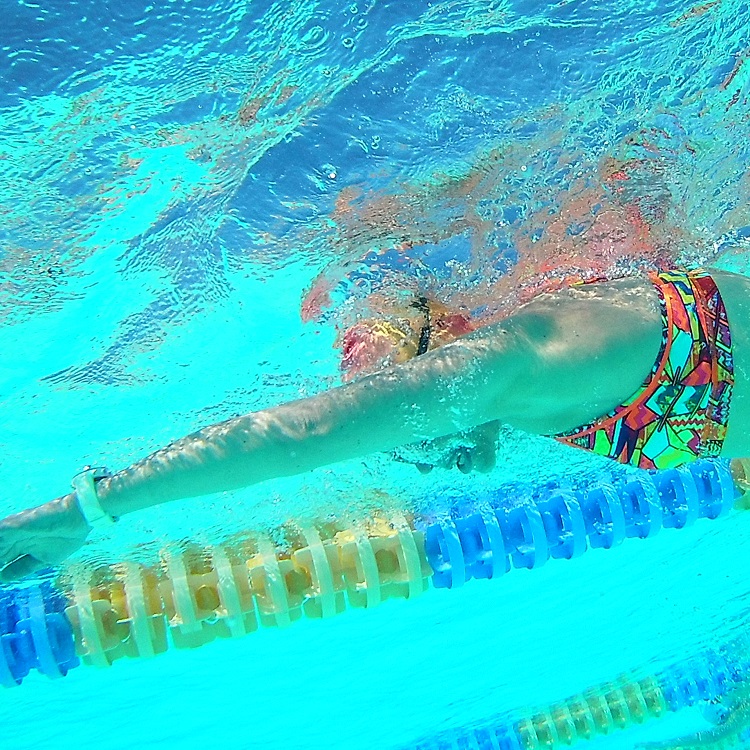
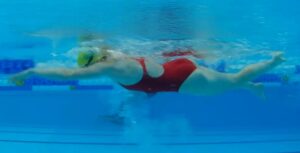
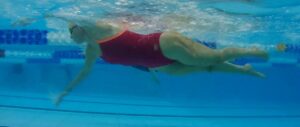
When the body is aligned—head, spine, hips, and heels sitting close to the surface—the swimmer moves through the water with minimal resistance. This streamlined shape allows the pull to connect properly, the kick to stabilise rather than compensate, and the breathing to happen without disrupting rhythm.
When alignment breaks down, the water pushes back. Hips sink, legs drag, the head lifts, and the swimmer must work harder for the same speed. Over time, this leads to fatigue, frustration, and plateaus in performance.
What Good Body Position Looks Like
A strong front crawl body line has three key characteristics:
- Horizontal alignment — The head, spine, hips, and heels sit close to the surface, creating a long, straight line.
- Stable rotation — The body rolls smoothly around the spine, not side‑to‑side like a seesaw.
- Relaxed head position — The gaze is downward or slightly forward, keeping the neck neutral and the hips lifted.
This position reduces frontal drag and allows the swimmer to “slice” through the water rather than push it aside.
 Common Body Position Mistakes
- Hips and legs sinking — Often caused by lifting the head too high or holding tension in the lower back.
- Over‑rotation — Rolling too far onto the side, which disrupts balance and causes the legs to scissor.
- Head too high — Creates a chain reaction: hips drop, kick becomes heavier, and breathing becomes rushed.
- Bent posture — A curved spine or tucked chin shortens the body line and increases drag.
How to Fix Body Position: Practical Drills and Cues
1. Head-Lead Balance Drill
Swim with arms by your sides, face in the water, and focus on keeping the head still and relaxed.
Why it works: It teaches the body to find natural balance without relying on the arms for stability.
2. 6-1-6 Drill with Rotation Control
Kick gently on your side with one arm extended and the other by your hip. Rotate every 6 kicks.
Why it works: Builds awareness of stable rotation and prevents over‑rolling.
3. Press the T Drill
Swim normally but imagine gently pressing your chest and sternum into the water.
Why it works: A light “press” lifts the hips without forcing the kick to work harder.
4. Kick with Snorkel and Alignment Focus
Use a snorkel and kick with arms extended. Keep the waterline between your eyebrows and hairline.
Why it works: Removes breathing disruptions and trains a long, neutral spine.
5. Superman Glide
Push off the wall in a long, stretched position and hold the glide as long as possible.
Why it works: Reinforces the feeling of length and streamlining before adding movement.
6. Fingertip Drag Drill
Swim with fingertips skimming the surface during recovery.
Why it works: Encourages a relaxed head position and stable rotation, which supports better alignment.
Coaching Cues Swimmers Can Use Instantly
- “Look two to three meters in front, not forward.”
- “Lengthen the body from fingertips to toes.”
- “Press the chest into the water, squeeze your glutes.”
- “Rotate around the spine, not over it.”
- “Kick from the hips, long legs.”
These simple cues help swimmers maintain alignment even when fatigue sets in.
Why Body Position Should Be Your First Priority
- Improving body position often delivers immediate gains:
- Faster speed with less effort
- Smoother breathing
- More effective catch and pull
- Reduced drag and wasted energy
- Better rhythm and timing
For many swimmers, fixing body position unlocks improvements they’ve been chasing for months.
Triathlon Training Week in Mallorca
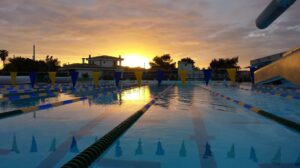 Looking to take your IRONMAN training into the real world? Join us in Colonia de Sant Jordi, Mallorca for an immersive triathlon experience that blends elite coaching with cinematic landscapes.
The Triathlon Training Camps in Mallorca offer a powerful environment for athletes of all levels. With expert-led sessions in swimming, cycling, and running—plus tailored mindset workshops—you’ll build confidence, endurance, and emotional clarity in every discipline.
- 🏊 Swim analysis in a world-class 50m pool and open water
- 🚴 Scenic rides through monastery climbs like Randa and San Salvador
- 🏃 Run technique and endurance on trails and a new 400m track
- 🧠 IRONMAN Coaching 1 coach to 8 athletes
Whether you're preparing for your first IRONMAN or chasing a breakthrough season, this camp is your launchpad.
Train hard. Think deeper. Leave transformed.
 Train Your Mind. Transform Your Race. Join F4L.
Triathlon isn’t just a test of physical endurance. It’s a mental crucible. The athletes who thrive aren’t just the fastest—they’re the ones who know how to stay calm in chaos, grounded in discomfort, and focused when everything else is trying to pull them off course.
That’s why mindset matters. And why F4L Triathlon Coaching is built around more than just metrics and mileage. We coach the whole athlete—body, mind, and spirit. Whether you’re chasing a personal best, your first finish line, or simply want to feel more confident in your training, F4L offers a coaching experience rooted in stoic principles and emotional intelligence. We help you:
- Focus on what you can control
- Prepare for the unexpected
- Embrace the journey
- Build resilience through discomfort
- Stay present in every moment
- Keep perspective when it counts
- Show up and do the work
This isn’t just theory—it’s how we train. Every session, every plan, every conversation is designed to help you become the kind of athlete who doesn’t just endure, but evolves.
If you’re ready to train smarter, race stronger, and think clearer—join us.
👉 Sign up for F4L Triathlon Coaching and start building the mindset that lasts