 I had a conversation recently that I have had, in various forms, dozens of times over nearly twenty years of coaching.
An athlete — experienced, dedicated, genuinely passionate — messaged me a few weeks before their A-race. They had been training hard. Really hard. Massive long rides. Back-to-back run days. Early mornings, late evenings. Strava was looking impressive.
They didn't make it to the start line.
Not injury. Not illness. Just empty. Cooked. Completely and utterly done — weeks before the race they had trained all year for.
This is what happens when we confuse effort with progress. When we mistake volume for value. And it happens more than you think.
The 'More Is More' Myth in Triathlon
Triathlon has a volume problem. Log on to any triathlon forum, scroll through Strava, or listen to the chat at your local club swim and you will hear the same things repeated over and over:
- "I rode 200 miles this week."
- "I've been doing double days."
- "My rival is doing massive sessions over Christmas."
- "I heard so-and-so is training six days a week, so I need to as well."
Here is what I have learned after coaching triathletes for two decades: most of those athletes are not getting faster. They are getting tired.
Social media shows you the session. It does not show you the missed workouts the following week, the niggles that became injuries, the motivation that quietly slipped away, or the athlete who DNS'd because they were burnt out by April.
Sustainable triathlon training is not glamorous. It does not make for exciting posts. But it is what actually works.
What Consistency Actually Looks Like
At F4L, my coaching philosophy is built on three pillars: consistency, sustainability, and balance. And here is the honest truth about the order they matter in: balance is first, sustainability is second, and consistency is third.
Not because consistency is least important — it is absolutely vital — but because you cannot be consistent without first being balanced and sustainable in your approach.
Think about it this way. Which athlete makes more progress over a twelve-month period?
- Athlete A: Three massive training weeks, then two weeks off with a sore knee. Three more big weeks. Another blowout. Repeat.
- Athlete B: Steady, purposeful, manageable sessions every week. Rarely flashy. Never a viral Strava post. Rarely misses a session.
Athlete B wins. Every single time. The compound effect of ten modest, well-executed sessions per week over fifty weeks absolutely obliterates three-weeks-on, two-weeks-off cycles.
Consistent work, not hard work, is what reaps the most dividends. That is not a soft option. That is science, experience, and twenty years of watching athletes achieve things they did not think were possible — by showing up, week after week, in a state fit to actually train.
The Real Cost of Overdoing It
When athletes do too much, the obvious consequence is injury. But that is only part of the picture. The real cost is wider than a sore Achilles or tight hip flexors.
Performance fatigue. You train your body to go longer... but slower. Without variation and recovery, you are literally coaching yourself to be more efficient at shuffling rather than racing.
Motivation loss. The athletes I worry about most are the ones who stop enjoying their training. When it becomes a relentless grind, the enjoyment — the very reason most of us got into this sport — disappears. Triathlon should be fun. I say that to every athlete I coach.
Life friction. You cannot train for an IRONMAN without support from your partner. Quite simply, you will be divorced before you get to the race. You have to fit triathlon around your job — if not, you will be unemployed. Training is important. So is everything else.
Balanced triathlon training is not just about balancing swim, bike and run. It is about balancing everything: nutrition, conditioning, family, work, time and life. A good coach helps you do that. A great coach insists on it.
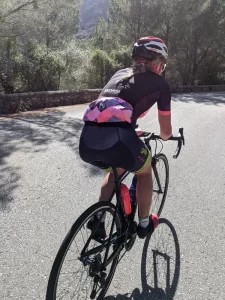 What a Sustainable Week Actually Looks Like
Every athlete is different, so I am not going to hand you a generic plan and call it coaching. But I can give you an illustration of the principle in action for a typical age-group IRONMAN athlete with a full-time job and a family.
- Two quality swim sessions — with purpose, not just laps
- Two or three bike sessions — including one longer ride at the weekend
- Two runs — one steady, one with a bit of pace work
- One full rest day — non-negotiable
- Sleep, good food, and time with the people who matter
Does that look modest compared to what you see on social media? Good. It should. Because this athlete will be fresh, motivated, and building genuine fitness in December — and they will be fit, healthy and ready to race in June.
We do not win anything for being king of the club run in October. The season is built quietly, patiently, purposefully.
How a Coach Helps You Do Less, Better
The hardest part of sustainable triathlon training is not doing the sessions. It is holding back when everything inside you wants to do more.
That is where having a coach makes the biggest difference. Not just in writing a plan — anyone can write a plan — but in being the objective voice that sees you as a whole person. Your coach is not caught up in the excitement of that big Sunday ride. They are watching the week as a whole, the month as a whole, and the season as a whole.
As an athlete, you will always find it hard to be objective about yourself. That is completely natural. Your coach's role is to apply their experience and knowledge to your life — with your family as first priority, your work as second, and your training built intelligently around both.
There is no magic formula. There is no plan from a magazine that works for everyone. But there is a methodology — one built on twenty years of coaching triathletes of all abilities, from first sprint to tenth IRONMAN — that consistently helps athletes achieve more by training smarter rather than harder.
Ready to Train Smarter?
If you are tired of the boom-and-bust cycle — big weeks followed by burnout, injuries, or just the nagging feeling that you are not getting where you want to be — then let's talk.
At F4L Triathlon Coaching, every programme is built around you — your goals, your life, and a philosophy of consistent, sustainable, balanced training that delivers results without costing you everything else that matters.
Explore our coaching programmes → www.f4lcoaching.com/training-programmes
Find out about our Mallorca Training Camp → www.triathlontrainingcamps.com
Read our coaching philosophy → www.f4lcoaching.com/triathlon-training-coaching-philosophy
 Train Your Mind. Transform Your Race. Join F4L.
Triathlon isn’t just a test of physical endurance. It’s a mental crucible. The athletes who thrive aren’t just the fastest—they’re the ones who know how to stay calm in chaos, grounded in discomfort, and focused when everything else is trying to pull them off course.
That’s why mindset matters. And why F4L Triathlon Coaching is built around more than just metrics and mileage. We coach the whole athlete—body, mind, and spirit. Whether you’re chasing a personal best, your first finish line, or simply want to feel more confident in your training, F4L offers a coaching experience rooted in stoic principles and emotional intelligence. We help you:
- Focus on what you can control
- Prepare for the unexpected
- Embrace the journey
- Build resilience through discomfort
- Stay present in every moment
- Keep perspective when it counts
- Show up and do the work
This isn’t just theory—it’s how we train. Every session, every plan, every conversation is designed to help you become the kind of athlete who doesn’t just endure, but evolves.
If you’re ready to train smarter, race stronger, and think clearer—join us.
👉 Sign up for F4L Triathlon Coaching and start building the mindset that lasts