(And How a Triathlon Coach Changes Everything)
You've Put in the Hours. So Why Doesn't Race Day Feel That Way?
You set your alarm for 5:30am. You log your miles. You track your nutrition, your heart rate, your sleep. You've read the articles — maybe even this one before it found you.
And yet, on race day, something doesn't add up.
You cross the finish line knowing you had more to give. Or worse, you don't make it to the start line at all — sidelined by an injury that crept up in the final weeks of training, or exhausted from a build-up that simply asked too much of your body and your life at the same time.
Here's the truth: the problem usually isn't effort. It's structure.
And structure, without someone who can see you clearly from the outside, is almost impossible to get right on your own.
What Most Triathletes Get Wrong
Training for a triathlon — whether it's your first sprint event or a full IRONMAN — involves three sports, each with its own technique demands, energy systems, and injury risks. Stacking them together intelligently across a week, a month, and a full season is a complex puzzle.
Most athletes solve it by doing more. More miles. More sessions. More hours.
But volume without purpose isn't training — it's just fatigue.
The athletes who perform consistently on race day are rarely the ones who trained the hardest. They're the ones who trained the smartest. They knew when to push, when to recover, and — critically — when their plan needed to change because life got in the way.
That kind of adaptable, intelligent training is very difficult to give yourself. Because you're too close to it.
The Three Pillars That Separate Good Athletes from Great Ones
At F4L Triathlon Coaching, every athlete's programme is built on three principles: Consistency, Sustainability, and Balance.
They sound simple. In practice, they're the hardest things to maintain — especially without support.
Consistency doesn't mean training every single day without fail. It means building habits that hold up over months and years, not just weeks. A missed session because of work or family isn't failure — it's life. The question is whether your plan is built to absorb it, or whether one disruption sends everything off the rails.
Sustainability is about training in a way your body can actually handle over time. Overtraining is one of the most common reasons experienced triathletes plateau — pushing too hard, too often, without adequate recovery. Why Most IRONMAN Athletes Plateau explores this in detail. If you've been training for years and can't understand why your times aren't improving, this is often why.
Balance is about your life, not just your training. Work, family, sleep, stress — all of it affects your performance. The best training plan in the world is useless if it can't fit around your actual life. Why Doing Less Makes You a Better Triathlete is worth reading if this resonates.
Getting all three right, consistently, across an entire season — that's where a coach makes all the difference.
What a Triathlon Coach Actually Does For You
A common misconception is that coaching is only for elite athletes — people chasing podiums or qualification slots. It isn't.
A good triathlon coach is part planner, part analyst, part sounding board, and — on the hard days — part motivator.
Here's what working with an F4L coach looks like in practice:
Your training plan is written for you, not for someone like you. Every athlete who joins F4L gets a programme built around their fitness, their schedule, their goals, and their equipment. Not a generic 16-week plan. Not a one-size-fits-all spreadsheet. Something that actually reflects who you are.
Your swim technique gets fixed, not just worked on. Swimming is the discipline where most triathletes lose the most time — not because they don't train enough, but because inefficiency compounds. Poor technique in the pool means you arrive at T1 already tired. Our Swim Analysis with Video Feedback service gives athletes clear, actionable improvements that produce immediate results.
You get someone in your corner on the hard days. Coaching at F4L includes constant support via WhatsApp and email. When you're wondering whether to push through or rest, you don't have to guess. You ask.
Your race selection is strategic, not hopeful. Choosing the right event — the right distance, the right course, the right time of year — matters more than most athletes realise. Your coach will help you identify races where you're set up to succeed, not just events you've entered out of ambition.
"But I've Been Training for Years — Do I Really Need a Coach?"
This is one of the most common questions we hear, and it's a fair one.
The honest answer is: experienced athletes often benefit more from coaching than beginners — precisely because they've been training solo for long enough that their bad habits are deeply embedded.
If you've been following a plan for years and wondering why you're not getting faster, the issue is rarely fitness. It's usually one of a handful of structural problems — training too hard on easy days, not hard enough on hard days, neglecting technique in one discipline, or simply not recovering well enough to actually adapt.
A fresh pair of expert eyes changes that quickly.
"I'm Not Sure I'm Serious Enough for a Coach"
 Let's be clear about something: F4L coaches work with athletes at every level. Beginners preparing for their first sprint triathlon. Shift workers — nurses, firefighters, people whose schedules change week to week — who need a plan that genuinely adapts to their availability. And yes, one of our favourite athletes completed her first-ever IRONMAN at 70.
There is no minimum level of seriousness required. There is only a goal — and a willingness to be supported in reaching it.
If your aim is to finish, a coach helps you finish strong and uninjured. If your aim is to podium, a coach gives you the structured path to get there. Wherever you are, the coaching relationship meets you there.
"I Don't Have Time to Train as Much as a Triathlete Should"
Good news: you probably don't need to.
Most F4L athletes end up training fewer hours than they were before — and racing faster. That's not a marketing claim; it's the natural result of training with purpose rather than volume. When every session has a specific goal, and recovery is treated as part of the programme rather than a sign of weakness, the gains accelerate.
If you're a shift worker, a parent, someone who travels regularly — your coach will build around your life. Athletes with completely unpredictable schedules have gone from couch to IRONMAN finisher with F4L. It's not magic. It's just planning that takes real life seriously.
What the Athlete Journey Looks Like
Many of the athletes who come to F4L start with a version of the same story: they've been at it for a while, they're putting in the work, but something isn't clicking. Within a few months of structured, personalised coaching, something shifts.
The feedback from our athletes says it better than we can:
"He asks you what you want to achieve and then helps you get there... I have completed a couple of Olympic Tris and an Ironman so far, each time exceeding my expectations on race day."
"For the first time I have completed the training program without being injured."
"Most F4L Triathletes end up training less hours and racing faster."
That's the coaching difference — not just the training, but the confidence, the clarity, and the structure that lets everything else fall into place.
Ready to Find Out What's Possible?
Whether you're training for your first triathlon or your tenth IRONMAN, the best next step is a conversation.
Browse our Coaching Plans to see what's available — from structured training programmes to full performance coaching with dedicated coach contact. Or get in touch directly and tell us about your goals. No obligation. No jargon. Just a straightforward chat about where you are and where you want to go.
Your A-race is out there. Let's make sure you arrive ready for it.
Related Articles:
- Why Doing Less Makes You a Better Triathlete
- Why Most IRONMAN Athletes Plateau
- Why Am I Not Getting Faster in Triathlon?
- IRONMAN Bike Pacing
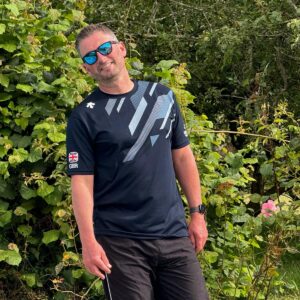
Paul Jones is a British Triathlon Level 3 Coach and IRONMAN Certified Coach, and founder of F4L Triathlon Coaching. Based in the North East of England, Paul coaches athletes of all levels from first-time triathletes to IRONMAN finishers.
Train Your Mind. Transform Your Race. Join F4L.
Triathlon isn’t just a test of physical endurance. It’s a mental crucible. The athletes who thrive aren’t just the fastest—they’re the ones who know how to stay calm in chaos, grounded in discomfort, and focused when everything else is trying to pull them off course.
That’s why mindset matters. And why F4L Triathlon Coaching is built around more than just metrics and mileage. We coach the whole athlete—body, mind, and spirit. Whether you’re chasing a personal best, your first finish line, or simply want to feel more confident in your training, F4L offers a coaching experience rooted in stoic principles and emotional intelligence. We help you:
- Focus on what you can control
- Prepare for the unexpected
- Embrace the journey
- Build resilience through discomfort
- Stay present in every moment
- Keep perspective when it counts
- Show up and do the work
This isn’t just theory—it’s how we train. Every session, every plan, every conversation is designed to help you become the kind of athlete who doesn’t just endure, but evolves.
If you’re ready to train smarter, race stronger, and think clearer—join us.
👉 Sign up for F4L Triathlon Coaching and start building the mindset that lasts