
The hidden factors that affect your triathlon training
 Sleep, heat, psychological stress, individual physiology, and family or work commitments all directly affect how well a triathlon training session is absorbed — often more than the session itself. A plan that ignores these factors is a common cause of plateaus, injury and burnout in age-group triathletes.
Every triathlete has had a week where the numbers on paper looked perfect — the swim, bike and run sessions were exactly as prescribed — but the legs felt like lead and motivation was nowhere to be found. Then, a few weeks later, a very similar week feels easy. The difference is rarely the plan itself; it's everything happening around the plan.
At F4L Triathlon Coaching, we build every programme around one core belief: training is only one input into performance. This article walks through the research behind the five biggest hidden factors, and explains how our coaching philosophy of consistent, sustainable, balanced training is built specifically to work with them, not against them.
How does sleep affect triathlon training?
Poor sleep impairs aerobic endurance, speed and reaction time, and makes the same session feel harder — while good sleep drives the muscle repair and glycogen restoration that training depends on. Most triathletes need 7–9 hours a night to recover properly.
Research reviewed in athlete-sleep consensus work published in the British Journal of Sports Medicine highlights that between 50–78% of athletes report ongoing sleep complaints, often linked to early starts, travel and training schedules rather than an inability to sleep well in general. Sleep is also central to physical repair: during deep sleep, growth hormone release drives muscle repair and glycogen restoration, while inadequate sleep raises inflammatory markers and disrupts the balance of the autonomic nervous system — the very system responsible for recovering from hard training. Chronically under-slept athletes also show a measurably higher injury risk, likely linked to slower reaction times and impaired decision-making under fatigue.
The practical takeaway for age-group triathletes juggling work and family: protecting 7–9 hours of sleep most nights will do more for your race build than almost any single session on the plan. If your week has been short on sleep, that's valuable information for your coach — not something to push through.
Does hot or cold weather affect triathlon performance?
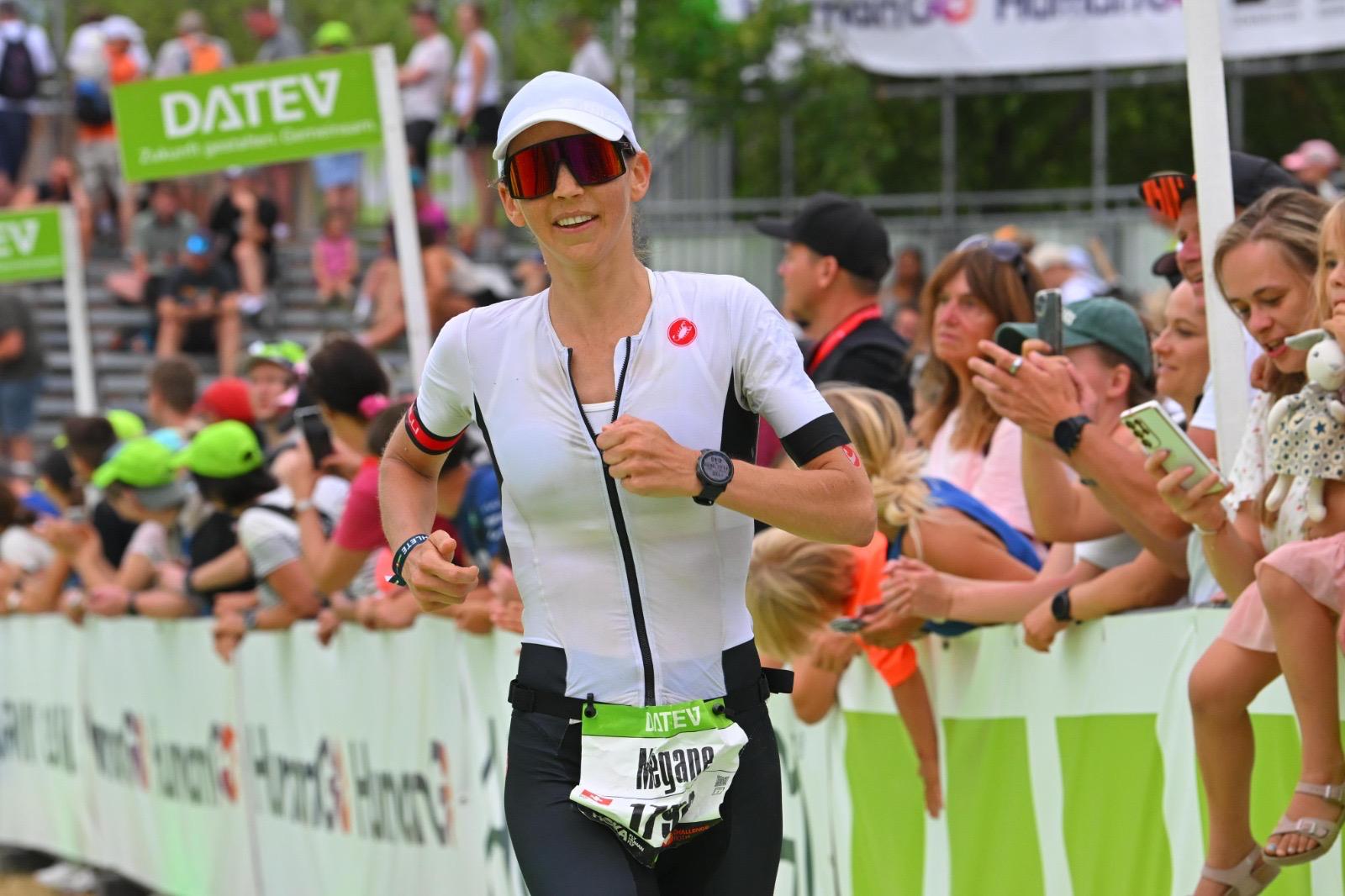 Yes — heat raises core temperature and cardiovascular strain, making sessions feel harder and reducing output, while repeated heat exposure over 1–2 weeks triggers real physiological adaptation. Cold, wet conditions carry their own hidden cost that pace alone doesn't capture.
Research on heat acclimatisation shows that repeated exposure to warm conditions triggers genuine physiological adaptations — improved sweat response, expanded blood plasma volume, and a lower heart rate for the same effort — and that these adaptations can improve performance even when racing in cooler conditions. Studies of elite athletes competing in hot, humid environments (including data gathered around the Tokyo Olympics) found that endurance athletes in particular experience larger rises in core temperature than power-based athletes, meaning long-course triathletes are especially exposed to heat-related performance decline if they haven't prepared for it.
The flip side matters too: cold, wet Northumberland training sessions carry their own physiological cost, and comparing a session done in driving January rain to one done on a warm July evening on effort or pace alone tells you very little. This is exactly why F4L coaching plans are built around effort and adaptation, not blind adherence to numbers that ignore the conditions they were produced in.
Why do two athletes respond differently to the same training plan?
Age, training history, hormonal status, illness and baseline fitness all change how much stress a session creates and how fast the body recovers — which is why identical plans can produce very different outcomes for different people.
This is the foundation of the overreaching-and-overtraining continuum described in the joint consensus statement from the European College of Sport Science and the American College of Sports Medicine. Their work makes an important distinction: some performance dips are simply “functional overreaching” — a normal, temporary dip that resolves with a few easier days and leads to a fitness gain. Left unmanaged, however, this can progress into non-functional overreaching and, eventually, overtraining syndrome — a state that can take months to recover from and is very difficult to distinguish from clinical burnout or depression.
The practical implication is that a plan has to be personalised and responsive. A session that's exactly right for one client may be too much — or not enough — for another with a different training history, even if their current fitness looks similar on paper. This is why ongoing monitoring and honest feedback from the client matters as much as the plan itself.
Can stress from work or life affect athletic performance?
Yes — psychological stress from work, family pressure or life events loads the same hormonal and nervous-system pathways as physical training, and research links high life stress combined with high training load to a greater risk of injury and overtraining.
A major consensus statement on the psychology of sport injury identifies psychological stress as the strongest known risk factor for acute injury, and shows that the combination of high life stress and high training load is a well-documented driver of overuse injury and overtraining. Stress from outside sport doesn't stay outside sport — it adds directly to the training stress you're already carrying, whether or not it shows up in your metrics.
This is one of the most under-appreciated factors in age-group endurance sport. A “recovery week” on paper isn't truly recovery if it coincides with the most stressful week at work all year. Good coaching has to ask about this, not just about splits and heart rate.
How do I train for a triathlon around a full-time job and family?
Effective plans are built around existing family and work commitments, not the other way around — prioritising consistency over volume, using early mornings or lunch breaks, and flexing around the busiest weeks rather than forcing every session in regardless of circumstances.
For the overwhelming majority of triathletes we coach, training happens in the gaps around a full-time job, a partner, children, ageing parents, and the everyday logistics of running a household. This isn't a footnote to training — for most people, it's the single biggest constraint on the entire programme. An athlete who trains at 5am before the kids wake up, or fits a run in during a lunch break, is not weaker or less committed than someone with more time to spare — they're operating under a completely different set of demands. Plans that don't account for this reality are set up to fail, either through missed sessions and guilt, or through athletes quietly sacrificing sleep or family time to “get the session done” — which, as covered above, often does more harm than good.
Bringing it all together: the F4L philosophy
None of this is a reason to abandon structure — it's the reason structure has to be built intelligently. At F4L, our coaching philosophy exists specifically to work with these realities rather than pretend they don't exist. We prioritise, in order: family first, work second, training third — because a plan that ignores this order simply won't survive contact with real life.
Consistency beats intensity over the timescales that matter for triathlon. A sustainable, slightly-conservative programme that's actually completed week after week — with sleep protected, effort adjusted for heat or life stress, and recovery treated as seriously as the hard sessions — will outperform an aggressive plan that gets derailed by burnout, illness or injury every few months.
That's why every F4L programme, whether for a first triathlon or an Ironman, is built around the person as much as the athlete: what's happening at work, at home, and in life, as well as what's happening on the bike.
If you're finding that life keeps getting in the way of your training plan, that's not a discipline problem — it's a sign the plan needs to flex around your life, not the other way around. Get in touch with F4L Triathlon Coaching to talk about a personalised programme built to fit around the demands you're actually facing.
Frequently Asked Questions
How many hours of sleep do triathletes need?
Most triathletes need 7 to 9 hours of sleep per night to recover from training. Sleep deprivation reduces aerobic endurance, speed and reaction time, and increases how hard a given session feels, so protecting sleep is one of the most effective recovery strategies available to age-group athletes.
Does hot weather affect triathlon training?
Yes. Heat increases core temperature and cardiovascular strain, making the same session feel harder and reducing output. Repeated heat exposure over 1 to 2 weeks triggers heat acclimatisation, improving sweat response and blood plasma volume, which can improve performance even in cooler race conditions.
Can stress from work or life affect athletic performance?
Yes. Psychological stress from work, family or life events loads the same hormonal and nervous system pathways as physical training. Research links high life stress combined with high training load to increased risk of overtraining and injury, so stressful periods usually call for reduced training load.
How do I train for a triathlon around a full-time job and family?
Successful age-group training plans are built around existing family and work commitments rather than the other way around. This typically means prioritising consistency over volume, using early morning or lunchtime sessions, and adjusting the plan flexibly around the busiest weeks rather than trying to force every session in regardless of circumstances.
What is the difference between overreaching and overtraining syndrome?
Functional overreaching is a short-term, planned dip in performance that resolves within days and leads to a fitness gain. Overtraining syndrome is a more serious, prolonged state of underperformance and fatigue that can take months to resolve and requires a significant reduction in training load to recover from.