Ask any long-distance triathlete what their worst race memory is.
It's rarely the swim.
It's usually not even the bike.
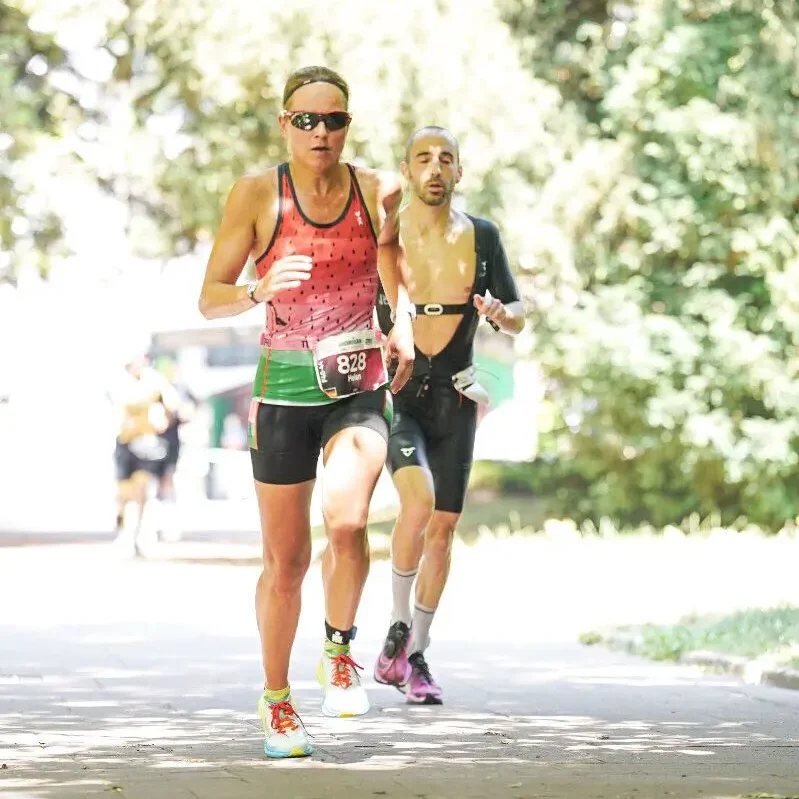
It's the run. Specifically, it's that moment — somewhere around kilometre five or six — when the legs stop cooperating and what was supposed to be a race becomes something else entirely. A shuffle. A negotiation. A long, uncomfortable conversation with yourself about whether you can keep moving forward.
I've watched it happen hundreds of times. And almost every single time, it was preventable.
Why Your IRONMAN Run Strategy Needs to Start Before T2
Here's what I've learned after nearly twenty years of coaching long-distance triathletes: the run is the most honest discipline in triathlon.
It doesn't care how good your swim was. It doesn't care how fast your bike split looks on paper. It takes every decision you made over the previous four, five, six hours — every watt above target power, every missed gel, every kilometre where you got carried away — and it presents the bill.
In full.
With interest.
A strong, progressive run well off the bike means you got it right. A shuffle from kilometre ten means something earlier went wrong. The run just delivers the verdict.
Why Most Athletes Can't Run Well Off the Bike
It comes down to four things. Almost always.
Riding too hard in the first hour. The early kilometres of the bike feel deceptively comfortable. Adrenaline is high, legs are fresh, and everything feels manageable. So athletes push. They chase riders ahead. They surge on the climbs. They're borrowing from the run — and the run always collects.
Under-fuelling on the bike. By the time you feel it, you're already behind. You cannot catch up on a calorie deficit in T2. The run begins with whatever you arrive with, and if that's not much, it shows quickly.
Going out too fast off the bike. The first kilometre of the run almost always feels manageable. It almost never is. Athletes who start by feel — rather than by a planned 70.3 run pacing target or heart rate ceiling — pay for it in the second half without exception.
Never actually training the run-off-the-bike. Running a half marathon or marathon in a long-distance triathlon is physiologically different from running those distances fresh. If your triathlon run training has no brick sessions — or only token ones — your legs have never learned to make that transition. Asking them to do it for the first time on race day rarely ends well.
What a Proper IRONMAN Run Strategy Actually Looks Like
This is the bit most athletes don't want to hear, because it means the solution isn't a new pair of trainers or a different gel brand.
The run is fixed by what happens before it.
It's fixed on the bike — through disciplined pacing and consistent fuelling. It's fixed in training — through brick sessions that teach your legs the transition repeatedly, so race day feels familiar rather than shocking. It's fixed in your head — through a mental plan that keeps you executing your IRONMAN run strategy when the discomfort is telling you to stop.
And it's fixed by understanding, really understanding, what running well off the bike in a long-distance triathlon actually demands. Not just the fitness side — the pacing, the nutrition, the form when it hurts, the psychological tools that keep you moving through the hardest kilometres.
That's exactly what the Earn the Run Blueprint covers.
About the Earn the Run Blueprint
I wrote this guide for 70.3 and full IRONMAN athletes of all levels — from athletes tackling their first long-distance race to experienced age-groupers who keep having the same run fall apart and can't figure out why.
It covers everything that goes into running well off the bike in a long-distance race, in plain language, with practical tools you can use immediately:
- Why the run falls apart — and how to trace it back to the actual cause
- 70.3 run pacing and IRONMAN run pacing — what your numbers should look like, and how to execute them when it counts
- Brick training that actually works — the four session types that build genuine run-off-the-bike fitness
- Run nutrition — fuelling a half marathon and marathon off the bike, including the cola question and when electrolytes become critical
- Form under fatigue — the four technique cues that matter most when everything hurts
- The mental game — how to handle the moment when your body makes a very convincing case for stopping
Plus a sample brick training week, a race week run checklist, and a quick-reference pacing guide for both distances.
It is, essentially, everything I go through with coached athletes when we build their IRONMAN run strategy — in a format you can use on your own.
Who It's For
If you're preparing for an IRONMAN 70.3 or a full IRONMAN — whether it's your first or your fifth — and you want to actually race the run rather than survive it, this guide is for you.
If you've had the race where the run fell apart and you've never quite understood why, this guide is for you.
And if you're currently building your triathlon run training plan and want to know what the run-specific sessions should actually look like, and in what order, and why — this guide is for you too.
You've done the swim. You've ridden the bike. Now earn the run.
👉 Download the Earn the Run Blueprint here
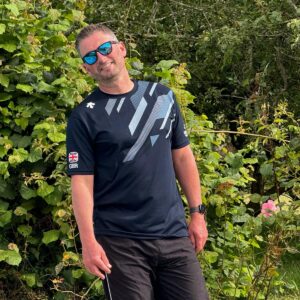
Paul Jones is a British Triathlon Level 3 Coach and IRONMAN Certified Coach, and founder of F4L Triathlon Coaching. Based in the North East of England, Paul coaches athletes of all levels from first-time triathletes to IRONMAN finishers.
Related reading: IRONMAN Bike Pacing | Why Doing Less Makes You a Better Triathlete | Why Most IRONMAN Athletes Plateau
Train Your Mind. Transform Your Race. Join F4L.
Triathlon isn’t just a test of physical endurance. It’s a mental crucible. The athletes who thrive aren’t just the fastest—they’re the ones who know how to stay calm in chaos, grounded in discomfort, and focused when everything else is trying to pull them off course.
That’s why mindset matters. And why F4L Triathlon Coaching is built around more than just metrics and mileage. We coach the whole athlete—body, mind, and spirit. Whether you’re chasing a personal best, your first finish line, or simply want to feel more confident in your training, F4L offers a coaching experience rooted in stoic principles and emotional intelligence. We help you:
- Focus on what you can control
- Prepare for the unexpected
- Embrace the journey
- Build resilience through discomfort
- Stay present in every moment
- Keep perspective when it counts
- Show up and do the work
This isn’t just theory—it’s how we train. Every session, every plan, every conversation is designed to help you become the kind of athlete who doesn’t just endure, but evolves.
If you’re ready to train smarter, race stronger, and think clearer—join us.
👉 Sign up for F4L Triathlon Coaching and start building the mindset that lasts