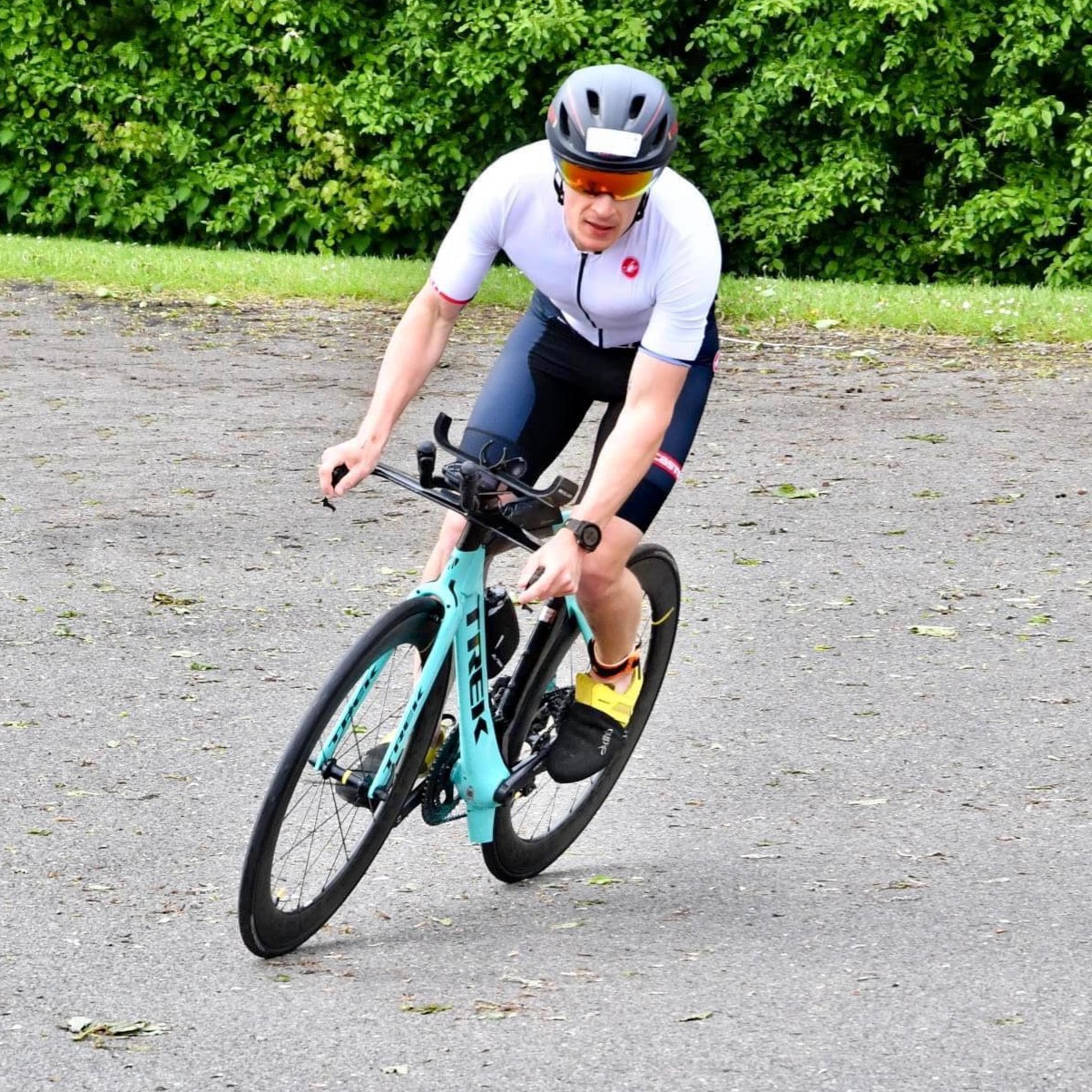
 FTP training is one of the best tools a triathlete can use. Your Functional Threshold Power gives you an honest, objective number to set training zones, pace your IRONMAN bike and track progress. But FTP is a snapshot from one test on one day. It doesn't know how you slept, what work's been like or whether you're coming down with a cold. The athletes who improve most use power to guide their training and their body to decide when to follow it, adjust it or ignore it.
Every winter the turbo comes out, FTP training starts, and the same thing happens. Athletes fall in love with a number.
FTP becomes the headline. It's in the group chat, it's on the screen, it's the thing people retest every few weeks to see if it's gone up. And I get it. Power is brilliant. It's the most useful piece of data you can have on the bike.
But I've also coached plenty of athletes who hit every watt in their plan right up to the point they got ill, picked up an injury or went into race day flat. The numbers looked perfect. The athlete wasn't.
After more than 20 years of coaching triathletes, here's how I think about FTP training, where it's brilliant, where it falls short, and how to use power and feel together.
What is FTP?
FTP stands for Functional Threshold Power. It's the highest average power, in watts, that you can sustain for roughly an hour. In practice, very few people ride flat out for an hour to find it. Most estimate it from a shorter test: the most common is a 20-minute all-out effort, with FTP taken as about 95% of that average. Ramp tests on Zwift or TrainerRoad are another popular option.
Once you have an FTP, everything in your FTP training hangs off it. Your training zones, your interval targets, your IRONMAN race plan and your training load in TrainingPeaks are all calculated as a percentage of that one number.
That's its strength. It's also why it matters so much when that number is wrong.
Why FTP training works so well for triathletes
Power has some big advantages over heart rate, speed or feel on their own:
- It's instant. Heart rate takes a minute or more to catch up with what you're doing. Power tells you what you're producing right now, which makes it ideal for intervals and for controlling effort on climbs.
- It ignores the conditions. Speed changes with wind, hills and road surface. 180 watts is 180 watts whether you're riding into a headwind on the Northumberland coast or tucked up on a smooth Mallorcan road.
- It makes training precise. A session written as "4 x 10 minutes at 90–95% of FTP" means exactly the same thing to you and to your coach.
- It protects your run. For an IRONMAN, riding at around 65–72% of FTP, and 75–80% for a 70.3, is one of the most reliable ways to get off the bike with legs left for the marathon. I go into this in detail in IRONMAN Bike Pacing.
- It shows progress. Seeing your FTP rise across a winter block is genuinely motivating, and it tells your coach the training is working.
If you have a power meter or a smart trainer, FTP training is worth doing properly. I'm not anti-data. I'm anti-data-only.
Where FTP training falls short
The problem isn't power. It's treating one number as the whole truth.
Your FTP is measured on a single day, usually when you're rested and motivated. Training happens on all the other days. And on those days, plenty of things change what your body can actually do at the same wattage:
- Sleep. A couple of short nights and your usual tempo effort will feel a lot harder than it did last week.
- Life stress. Your body doesn't separate a deadline at work from a hard interval session. Stress is stress, and it all comes out of the same pot.
- Illness. You can often still hit your numbers in the early stages of a cold. That's exactly when hitting them does the most damage.
- Heat. On a hot day, or a turbo session in a warm room with no fan, your heart rate climbs and the same watts cost you far more.
- Fuelling. Under-fuel a long ride and the power can hold for a while, until it suddenly doesn't.
- Accumulated fatigue. Deep into a training block, your true FTP on that day may be lower than the number in your settings.
- The test itself. Indoor and outdoor power often differ, different power meters can read differently, and a bad test sets every zone wrong for weeks.
The power meter measures what you're producing. It has no idea what it's costing you. That's your body's job.
Listening to your body: the signs the numbers miss
"Listen to your body" gets thrown around a lot, so let's make it specific. These are the signals I teach my athletes to notice:
- Effort doesn't match the watts. Your usual endurance power feels like tempo. This is the single most useful warning sign, and it often shows up before anything else.
- Heart rate is out of character. Unusually high for the power, or stuck low and refusing to rise when you push. Both can point to fatigue.
- Heavy legs that don't clear. One heavy day is normal. Three or four in a row isn't.
- Poor sleep and a raised resting heart rate. If your watch tracks resting heart rate or HRV, a trend in the wrong direction over several days is worth noting.
- Mood and motivation. Irritable, flat, dreading sessions you'd normally enjoy. Your head often knows before your legs do.
- Niggles. A tight calf or a sore knee that keeps coming back is information, not an inconvenience.
None of these show up on a power file. All of them matter more than a few watts in your FTP training.
How to combine FTP training and RPE
The answer isn't power or feel. It's both, checked against each other. The simplest way to do that is to learn what each power zone should feel like using RPE, your Rating of Perceived Exertion on a scale of 1 to 10.
| Zone | % of FTP | RPE (1–10) | How it should feel |
|---|---|---|---|
| 1. Recovery | Below 55% | 1–2 | Very easy. Spinning the legs, full conversation. |
| 2. Endurance | 56–75% | 3–4 | Comfortable all day. You can talk in full sentences. IRONMAN race effort sits here. |
| 3. Tempo | 76–90% | 5–6 | Steady and purposeful. Short sentences only. 70.3 race effort sits at the lower end. |
| 4. Threshold | 91–105% | 7–8 | Hard and controlled. A few words at a time. |
| 5. VO2 max | 106–120% | 9 | Very hard. Only sustainable for a few minutes. |
| 6. Anaerobic | Above 120% | 10 | Flat out. Seconds, not minutes. |
These zones are based on the widely used Coggan power zones. The RPE column is a guide, not a law. What matters is learning your normal and noticing when today doesn't match it.
A simple check-in routine for FTP training
- Before the session: rate how ready you feel from 1 to 10. Sleep, legs, mood. Ten seconds, that's all.
- During the session: once you've settled into the first effort, ask yourself what RPE you'd give it. Compare it with what that zone normally feels like.
- After the session: log your RPE and a quick comment in TrainingPeaks. Over a few weeks, patterns jump out that you'd never spot day to day.
That last step is the one most athletes skip, and it's the one that helps a coach most. When I can see that the same watts felt like a 4 three weeks ago and a 6 today, I know to adjust the week before something breaks.
When to trust the numbers and when to trust your body
Here are the FTP training rules I give my athletes:
- If RPE is two or more points higher than normal for your target watts, back off. Drop to endurance or cut the session short. One missed interval session never ruined a season. Grinding through a bad one regularly does.
- If you feel great, don't chase more. Stick to the plan. The good days are when overcooking a session feels easy, and you pay for it later in the week.
- In the heat, ride to feel and heart rate, not watts. Your normal numbers will cost too much. Accept lower power and protect the session.
- If you're ill, rest. No session is worth extending a cold by a week.
- If you can't hit your intervals two sessions running, talk to your coach. Either the plan needs adjusting, the FTP is set too high, or life is taking more out of you than you realise.
- On race day, use power as a cap, not a target. Early on, it stops you riding too hard while you feel fresh. Later, feel and fuelling take over. I cover this in Your Watch Is Lying to You.
 FTP training for IRONMAN: durability beats a bigger number
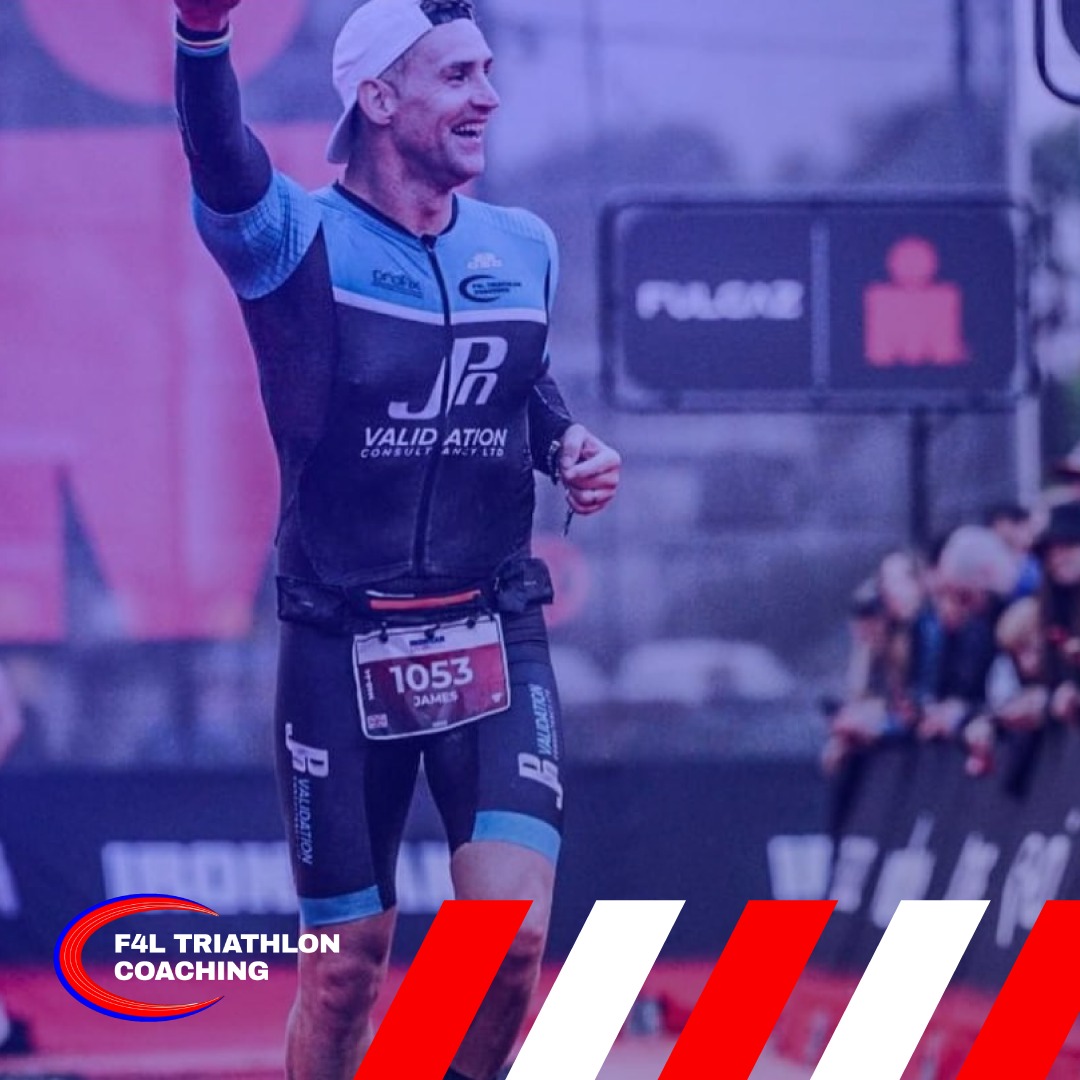
Here's something the FTP leaderboard won't tell you. For long-distance triathlon, a higher FTP is useful, but it isn't the goal.
An IRONMAN bike is ridden at around two-thirds of your FTP for five, six or seven hours, and then you have to run a marathon. What decides your race is how well you can hold that steady, moderate power for hours without your heart rate drifting up, your fuelling falling apart or your back giving in on the aero bars. That's durability, and it's built with long, steady, well-fuelled rides, not by retesting your FTP every three weeks.
One useful way to track it is aerobic decoupling, which TrainingPeaks shows as Pw:Hr. On a long steady ride, it compares your power to your heart rate in the first half and the second half. If your heart rate climbs a lot while power stays the same, your aerobic endurance has more work to do. TrainingPeaks treats decoupling under 5% as a sign of strong aerobic endurance at that intensity.
So test your FTP every six to eight weeks to keep your FTP training zones accurate, and spend the rest of your energy on the things that actually decide long-course races.
How to use FTP training this winter
If you're building towards a 2027 race, this is how I'd approach FTP training:
- Test once at the start of your block so your zones are right, then retest every six to eight weeks.
- Do most of your riding in endurance, with one or two quality sessions a week, not every ride as hard as you can manage.
- Log RPE on every session and add a comment. It takes seconds.
- Use a fan on the turbo and fuel sessions over an hour. Heat and under-fuelling are the two most common reasons indoor power feels harder than it should.
- Build some rides without looking at the screen. Ride to feel, then check the file afterwards. You'll learn far more about yourself than you expect.
If the dark evenings are already getting to you, Surviving the Dark, Wet Turbo Season has plenty of ideas for keeping it going until spring.
 Coaching that uses the data and the athlete
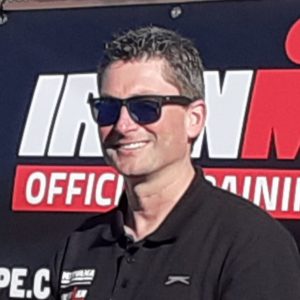
This is exactly how I coach. Every F4L athlete's plan is delivered through TrainingPeaks, built on accurate power and heart rate zones, and adjusted every week based on what the data shows and what the athlete tells me. Family first, work second, training third. A good week on paper means nothing if it leaves you wrecked for everything else in your life.
"I've been training with Paul for around six months now, and I've never run, swum, or cycled faster." — Lizzie, F4L athlete
If you're planning an IRONMAN or a triathlon in 2027 and want a plan that uses your numbers properly without letting them run your life, enquire about 2027 coaching here. And if you'd like to ride Mallorca's climbs with coaches who'll help you learn what your efforts really feel like, our Mallorca Triathlon Training Camp 2027 runs 17–24 April.
Frequently asked questions
What is a good FTP for a triathlete?
There's no single good number, because FTP depends on body weight, age, sex and training history. Many athletes compare watts per kilogram instead. For IRONMAN, a big FTP matters less than how well you can hold 65–72% of it for several hours and still run well.
How often should I test my FTP?
Every six to eight weeks is plenty for most triathletes doing structured FTP training. Test when you're reasonably rested, under the same conditions each time, and update your training zones afterwards. Testing more often adds fatigue without telling you much more.
What percentage of FTP should I ride an IRONMAN at?
Most age-group athletes should ride a full IRONMAN at around 65–72% of FTP, and a 70.3 at around 75–80%. Use power as a cap early in the bike, and let heart rate, feel and fuelling guide you later on.
Is it better to train with power or heart rate?
Use both. Good FTP training combines them. Power tells you exactly what you're producing right now. Heart rate and RPE tell you what it's costing you. When the two stop matching, for example high heart rate at normal power, that's useful information about fatigue, heat or illness.
Can I train for a triathlon without a power meter?
Yes. Plenty of athletes train and race well using heart rate and RPE. A power meter or smart trainer makes sessions more precise and pacing easier, but learning what each effort feels like is valuable whether you have one or not.
What is RPE in cycling?
RPE stands for Rating of Perceived Exertion. It's how hard an effort feels on a scale, usually 1 to 10. Easy endurance riding is around 3–4, threshold is 7–8, and an all-out sprint is 10. Logging RPE alongside power helps you and your coach spot fatigue early.
Related Reading
Why a Coached Training Camp Changes the Game
Anyone can book a week in the sun and ride their bike. What moves you forward is having a coach watching you do it.
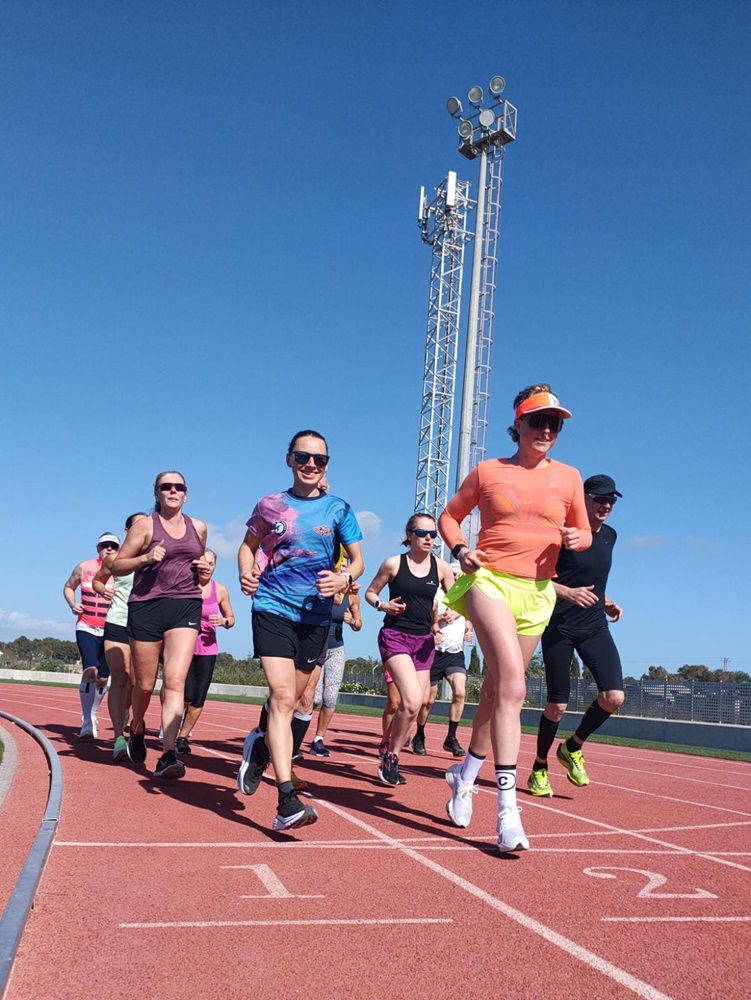
That's what you're paying for on our camp. The week starts with bike skills and swim video analysis, so we know exactly what each athlete needs to work on before the real training begins. From there, every session is coached: poolside feedback as you swim, individual work on the faults the video picked up, guidance on the climbs and descents, and transition practice until it's second nature. Every drill has a clear purpose, and you'll be told why you're doing it. We pick the two or three changes that will make the biggest difference to you, rather than burying you in everything that could be better.
It works for mixed abilities too, because the coaching is aimed at the individual and not the group:
"The coaching team were always approachable and made me feel as if I was getting 1 to 1 coaching at all times even though it was a mixed ability group, they explained why I was struggling in certain areas and how to correct it with every drill having a clear objective."
Add warm weather, quality open water swimming, proper hills and no distractions from work, and you get a week of coached training that's almost impossible to replicate solo through a British winter. You go home fitter, and you go home knowing what to work on and how to fix it.
Our next Mallorca training camp runs 17–24 April 2027 in Colonia de Sant Jordi, from £1,099pp, with a £250 deposit to secure your place. Timed right after a winter of proper base building, it's the ideal springboard into race season for anyone building towards a 2027 IRONMAN.
Where Coaching Makes the Difference
I've spent over 20 years coaching triathletes, and the plans that work aren't generic ones pulled off a shelf. My job is to help people achieve the impossible — their goals, their ambitions — whether that's getting to a first triathlon finish line or chasing a Kona qualification, built around training that fits real life: family first, work second, training third, and still gets you to the start line in the shape of your life.
I'm a British Triathlon Level 3 and IRONMAN Certified Coach, also holding Triathlon Australia Performance Coach and Certified Biomechanics Coach credentials — so whatever stage you're at, the plan in front of you is built on what actually works, not what looks good on paper.
Start Now, Not in March
If 2027 is your IRONMAN year, the work starts now — not when the weather turns. Get in touch about 1-2-1 coaching with F4L, or secure your place on the 2027 Mallorca training camp and give your off-season a proper finish line of its own.