(And Why It's the Making of Your 2027 Season, Not the Break From It)
By Paul Jones, British Triathlon Level 3 Coach and IRONMAN Certified Coach, F4L Triathlon Coaching
The clocks haven't gone back yet, but you can feel it coming. The evening ride that was still light in August is now a dash to get changed before it's dark. The open water is getting colder by the week. And somewhere in the back of every triathlete's mind, the same thought is forming: this is where it gets hard.
Not hard in a training-load sense. Hard in a keep-showing-up sense.
After twenty-plus years coaching age-groupers through British autumns and winters, I can tell you exactly when most athletes lose their season — and it isn't during a big IRONMAN build in January. It's now, in the six to eight weeks after the last race of the year, when the structure disappears, the light disappears, and the turbo trainer in the garage starts to feel like a punishment instead of a tool.
This article is about how to get through this stretch without losing the fitness you spent all summer building — and why, if you handle it right, this is actually the period that sets up your best season yet.
Why This Is the Season Most Triathletes Lose
Racing season gives you a rhythm you don't have to think about. There's a date on the calendar, a taper to plan for, and a reason every session matters. Take that away, and most athletes are training on willpower alone within a fortnight — which is a losing strategy against a 6pm sunset and driving rain.
The dropout doesn't usually look dramatic. It looks like one missed turbo session becoming two, becoming "I'll pick it back up properly in the new year." By March, that athlete is starting their build from a much lower base than the one they finished the season on — and wondering why the same training plan that worked last year feels so much harder this time.
The Turbo Trap
There are two ways athletes get this wrong, and I see both every autumn.
The first is drift. No structured sessions, no target, just "getting some hours in" on the turbo while watching TV. It feels productive because you're sweating, but with no purpose behind it, fitness quietly slides and technique gets worse, not better.
The second is the opposite problem — treating every indoor session like a threshold test because it's the only training happening, and burning out on intensity by November. Riding hard indoors, several times a week, with no easy days, is one of the fastest routes to illness or a niggle that costs you the whole winter.
Good winter training sits between these two. Structured, but not punishing. Purposeful, but not maximal every time.
What Good Indoor Training Actually Looks Like
A handful of principles that separate athletes who arrive at spring race-ready from those who arrive undercooked:
- Every session has one job. Whether that's aerobic endurance, cadence work, threshold intervals or simply time on the bike — know what today's session is for before you start it. Undirected hours are the single biggest waste of a winter.
- Keep the majority easy. The base of the pyramid doesn't change just because you've moved indoors. Most of your riding should still be comfortably conversational.
- Use the platform, don't fight it. Smart trainers and structured platforms exist to make specific, controlled sessions easier than they've ever been. If you're not using one, this is the winter to start.
- Fix what racing season never lets you fix. Cadence habits, single-leg drills, bike position, run form drills — the off-season is the only time of year with the headspace to actually work on these without a race looming.
- Build strength alongside the cardio. Two short strength sessions a week through autumn and winter do more for your 2027 injury resilience than almost anything else on the plan.
- Protect one thing you enjoy. A weekly group turbo session, a Zwift race, a coffee-shop-ride substitute — whatever keeps this human rather than purely mechanical.
Making It Bearable — And Genuinely Useful
You don't beat the dark, wet turbo season by gritting your teeth through it. You beat it by changing what you're asking of yourself.
Shorter, sharper sessions beat long, joyless ones at this time of year. Forty-five focused minutes with a clear purpose will do more for you — and be far easier to actually complete on a wet Tuesday night — than ninety minutes of aimless pedalling. If you've been putting off a proper bike fit, a swim video analysis, or finally sorting your run cadence, this is the window to do it: less racing means more capacity to actually absorb technical change.
And if you've spent the summer chasing splits and watts, this is also a good time to reconnect with training by feel — something I wrote about in Your Watch Is Lying to You. An indoor session is one of the few places you can genuinely separate effort from ego, because there's no one to race but the numbers on the screen.
 This Is Also the Best Time to Plan Your Way Out of It
Here's the part most athletes miss: the darkest, wettest months are exactly when you should be booking the thing that gets you out of them.
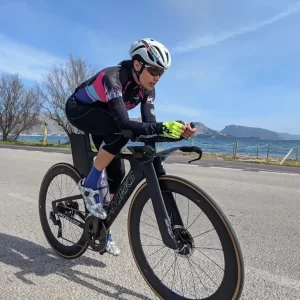
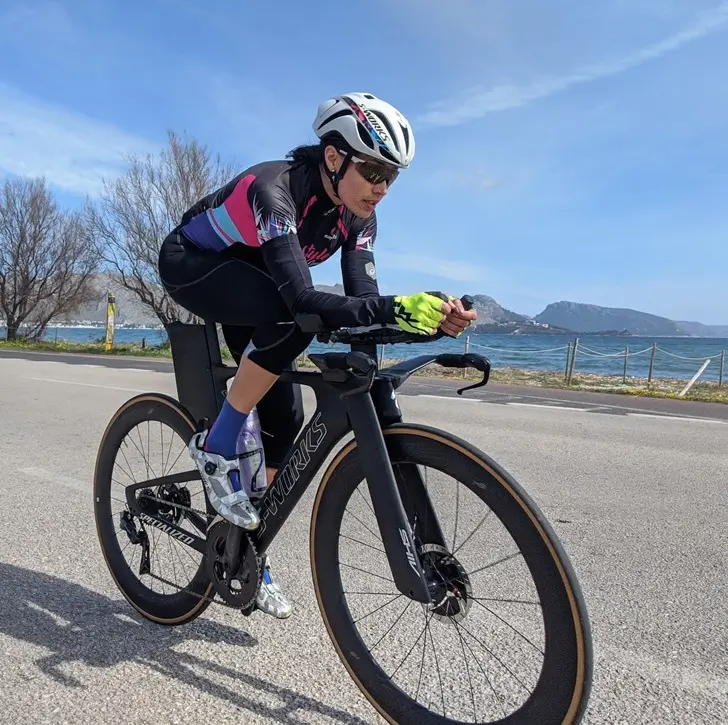
Every April, F4L runs a training camp in Colonia de Sant Jordi, Mallorca — seven nights of warm-weather swim, bike and run training, based at the sea-view BEST Centre with half-board included. The next one runs 17–24 April 2027, and it's built specifically to land at the point in the season where UK-based athletes most need it: after months of turbo miles and short, dark sessions, with genuine road miles, open water and warm-weather running still ahead of the early-season races.
It includes pool and open-water swim sessions with video analysis, proper cycling routes (including some genuinely iconic climbs), running on track and trail, transition practice, and athlete workshops — all with coaching input throughout the week, not just a group holiday with a bike.
A place is currently £1,099 twin share (£160 single supplement), secured with a £250 deposit, with bike hire available at £180 for the week if you'd rather not fly with your own. Booking now, in the depths of autumn, gives you something concrete on the calendar to train towards through the grim months — which, as every coach will tell you, is worth more to your consistency than almost any training tip in this article. Full details and booking are at triathlontrainingcamps.com.
Where Coaching Makes the Difference
This is the time of year I earn my keep as a coach, if I'm honest. Anyone can follow a plan when the sun's out and there's a race in six weeks. The skill is building a programme that flexes around dark evenings, family commitments and grim weather without losing the thread of what you're actually training for — and adjusting it in real time when life gets in the way, rather than leaving you to either force it or abandon it.
That's the whole basis of how F4L coaches: family first, work second, training third, with a plan built to survive contact with a British winter rather than pretend it doesn't exist.
Start Now, Not in March
The athletes who arrive at their spring race fit, healthy and confident aren't the ones who trained hardest in January. They're the ones who stayed consistent through October, November and December, when it would have been easy to let it slide. You don't need heroics right now — you need a plan that fits the season you're actually in, and the discipline to keep showing up to it in the dark.
If you'd like a structured winter programme built around your life, your goals and the realities of training through a Northumberland — or anywhere else's — winter, get in touch or find out more about online IRONMAN and triathlon coaching with F4L. We're currently taking on athletes building towards their 2027 season.
Frequently Asked Questions
How do I stay motivated on the turbo trainer through autumn and winter?
Give every session a specific purpose rather than just "getting the hours in," keep sessions shorter and more focused during the darkest months, use a structured platform to make sessions engaging, and put something on the calendar — a race, a camp, a goal — to train towards. Motivation follows a clear "why"; it rarely shows up on its own.
Is it bad to do high-intensity turbo sessions every time I train indoors?
Yes, if it's happening several times a week with no easy days. Riding hard indoors feels productive, but without recovery it's one of the fastest routes to illness, burnout or a niggle that can cost you weeks of training. The majority of your indoor riding should still be easy.
How much training will I lose if I take a break from structured sessions over winter?
Aerobic fitness declines gradually if you keep some consistent, easy volume going — the damage comes from stopping altogether for weeks at a time. A much-reduced but consistent programme through winter will leave you in a far better position than an all-or-nothing approach.
What should I focus on in the off-season if I'm not racing?
Technique work that racing season never gives you time for — cadence, bike position, run form, swim stroke — alongside two short strength sessions a week and a solid base of easy aerobic volume. This is the window to fix limiters, not just maintain fitness.
When should I book a spring training camp?
As early as possible. Booking in autumn, well ahead of the April camp, secures your place with a £250 deposit and gives you a concrete goal to train towards through the winter months — which is often more valuable to your consistency than any single training session.
If the run has cost you before, let's make sure it doesn't again.
Everything in this article — the heat management, the pacing discipline, the preparation that most athletes skip — is exactly what I work through with every coached athlete before a hot-weather race. Not as a checklist. As a plan built around you, your race, and the conditions you'll actually face on the day.
F4L Triathlon Coaching is built around one idea: that the athletes who race well aren't just the fittest — they're the ones who've prepared for the details that fall apart when it counts. The heat. The second half of the run. The moment when everything hurts and the plan is the only thing keeping you moving.
If you're ready to stop guessing and start building a race you can actually execute: