How to Pace an IRONMAN: Swim, Bike and Run Targets for a Strong Finish
By Paul Jones, British Triathlon Level 3 Coach and IRONMAN Certified Coach, F4L Triathlon Coaching
 After 20 years of coaching triathletes, I can tell you exactly how most bad IRONMAN days start: not with a mechanical, not with cramp, and not with bad weather. They start in the first hour of the bike, when an athlete who's trained for months decides the numbers on their head unit are too conservative for how good they feel. Six hours later, that decision is the reason their marathon falls apart.
Pacing an IRONMAN isn't about holding back out of fear — it's about spending your energy deliberately, in the order the day actually rewards it. Here's how I coach athletes to pace the swim, bike and run, and where the fuelling needs to line up with each one.
Swim: Get In, Settle In, Save Your Legs
The swim is the one leg of the day where going slightly too easy costs you almost nothing, and going too hard costs you the whole race. A hard swim floods your legs with lactate before you've even racked your bike, and it's very hard to pace your way out of that hole.
Aim for a relaxed, controlled effort — roughly what you'd call Zone 2, where your breathing stays rhythmic and you could hold a conversation in short bursts if you had to. Focus on a long, smooth stroke and clean sighting rather than turnover. If there's a pack of swimmers moving at a sensible pace near you, sit on their feet or hip — drafting in open water can save you real energy for a cost of precisely nothing.
If you want dedicated technique and pacing work in the water, that's exactly what our 1-2-1 open water swim sessions in Northumberland are for.
Bike: Where IRONMAN Races Are Won and Lost
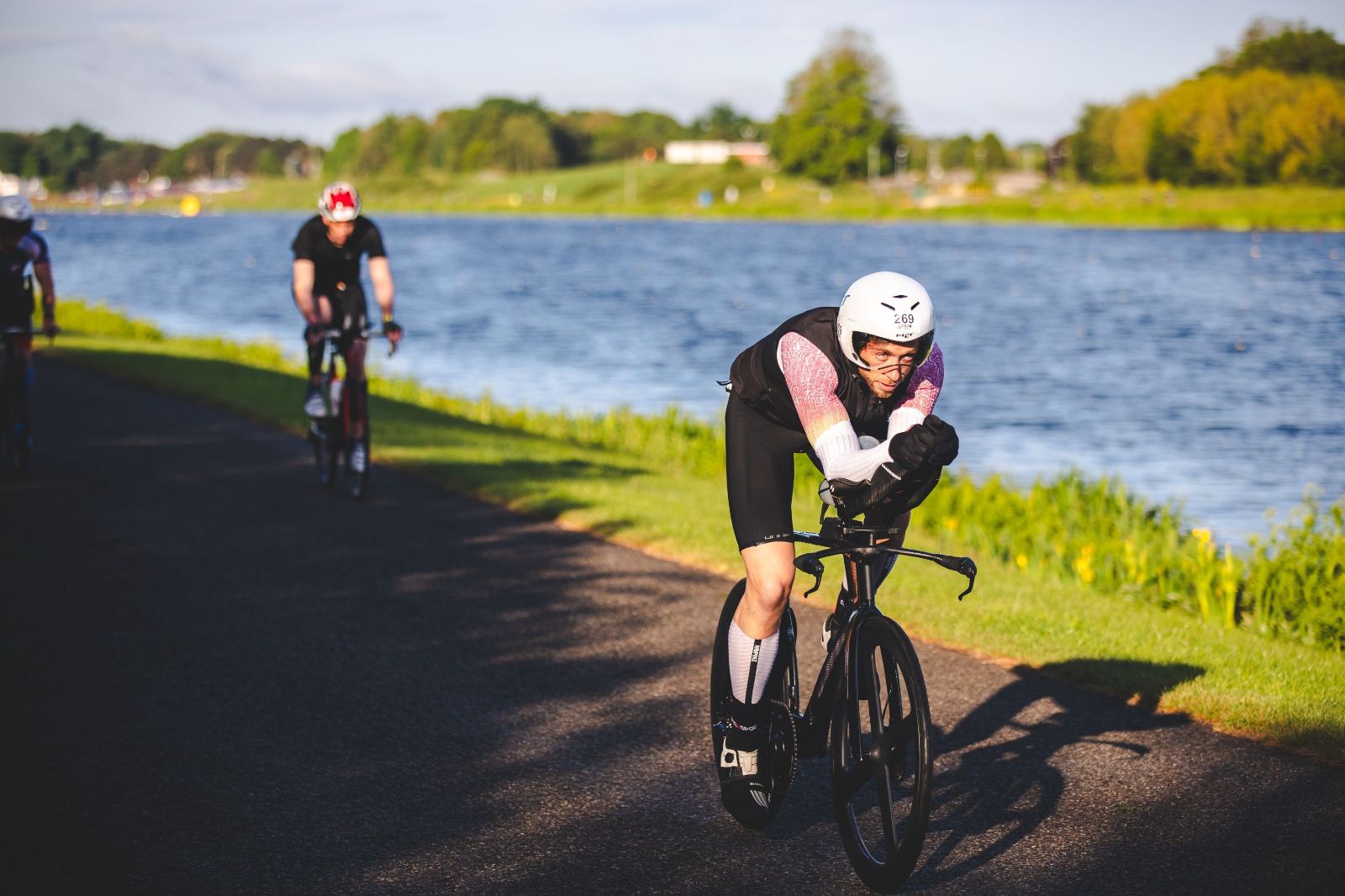
The bike is the longest leg of the day and, by far, the one with the most room to sabotage your run. This is where I see the most talented athletes lose races — not because they lacked fitness, but because they raced the first 40 miles by feel instead of by plan.
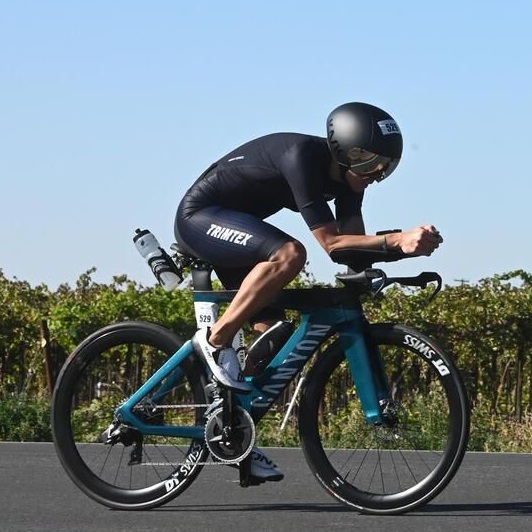
If you're riding with a power meter, I coach full-distance IRONMAN athletes to hold 65–72% of FTP for the bike leg, with cadence kept high — around 80–90rpm — rather than grinding a big gear. On climbs, it's fine to let power drift up, but cap it at no more than 110% of your target and get back on plan as soon as the road flattens. If you don't race with power, use heart rate and perceived effort instead: it should feel like a pace you could hold all day, not one you're gritting your teeth through.
The pattern I ask every athlete to follow is what I call the three-thirds approach: disciplined restraint for the first third of the bike — let people pass you, it doesn't matter — steady, consistent power through the middle third with nutrition on schedule, and only in the final third, if you've paced it well, do you have licence to push a little harder. I've written a full breakdown of this in IRONMAN Bike Pacing if you want the detail.
The maths on getting this wrong is brutal. Ride at 76–78% of FTP instead of your planned 65–72%, and you might gain six to eight minutes on the bike split. Athletes who do this typically go on to lose 35–50 minutes on the marathon — a net loss of half an hour or more, plus a much worse day. Every watt you don't need to spend on the bike is a watt you get to spend on the run.
Run: Why Even Pacing Beats a Fast Start
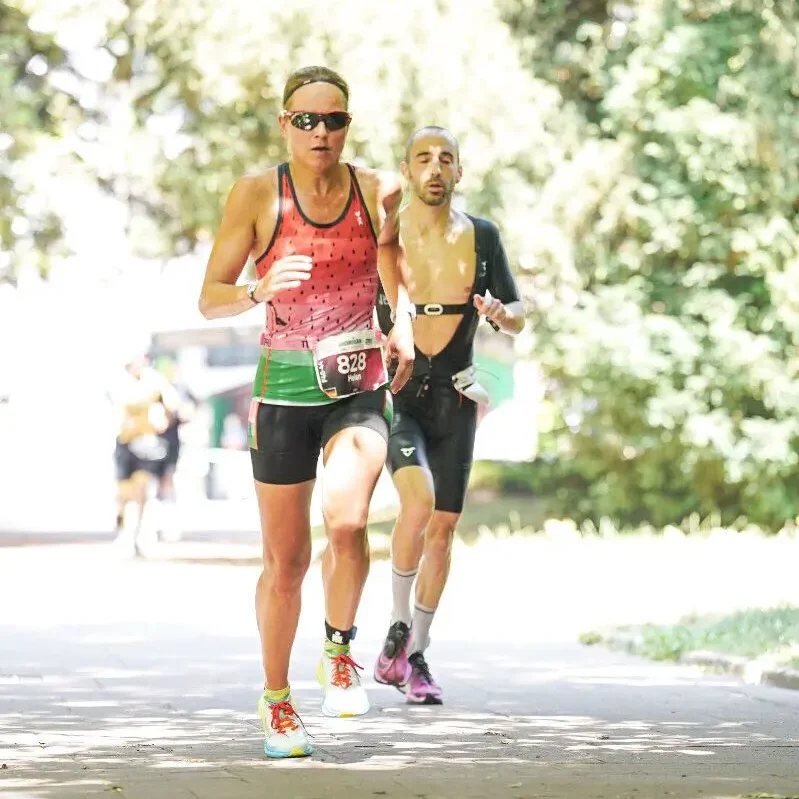 The run is the most honest part of an IRONMAN — it shows you exactly how well you paced the previous seven or eight hours. Negative splitting an IRONMAN marathon is vanishingly rare, even among professionals. What separates a good run from an implosion is usually nothing more exotic than even pacing and disciplined fuelling.
A simple rule of thumb I give athletes: run the first 10–16km 15–20 seconds per kilometre slower than your target race pace, no matter how good you feel. Settle into your real target pace through the middle of the marathon, and treat the closing 10km as a mental and fuelling exercise rather than a pacing one — by that point, the pacing decisions that matter have already been made.
Have a fixed aid-station routine and stick to it — for most athletes that's a carb gel and water or electrolyte drink at every station — rather than deciding on the fly when you're fatigued and your judgement is worst. And practise running off the bike in training; race day should feel familiar, not like the first time you've tried it. We go into this in far more depth in Earn the Run: The IRONMAN Run Strategy Most Athletes Get Completely Wrong.
Fuelling and Hydration Targets
Pacing and fuelling aren't separate problems — they're the same problem. Push too hard and your gut can't absorb what you're putting in; under-fuel and even perfect pacing won't save you from the bonk. These are the ranges I coach as a starting point, refined for each athlete in training:
| Nutrient | Target range | Notes |
| Carbohydrate | 90–120g per hour | Split across gels, drink mix and solid food on the bike; gels only once you're on the run |
| Fluid | 500–750ml per hour (more in the heat) | Go by sweat rate and conditions, not a fixed number — practise this in training |
| Sodium | 500–1,000mg per hour | Higher end for heavy or salty sweaters and hot-weather races |
The Pacing Cheat Sheet
- Swim: relaxed Zone 2 effort, long smooth stroke, draft where you can
- Bike: 68–78% FTP (or comfortable all-day effort by feel/HR), cadence 80–90rpm, cap climbs at 110%
- Run: 15–20 sec/km slower than target for the first third, even effort through the middle, grit and fuelling for the finish
- Fuel: 90-120g carbs/hour, 500–750ml fluid/hour (more in heat), 500–1,000mg sodium/hour
- Golden rule: if it feels too easy on the bike in hour one, it's probably paced correctly
 Why a Training Camp Changes the Game
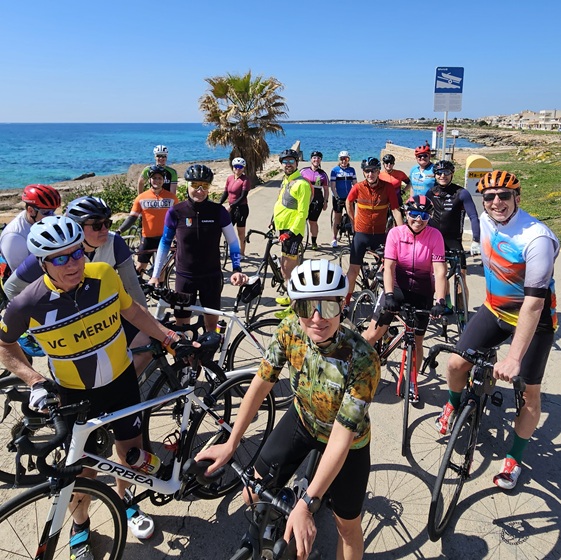
A well-run training camp compresses months of this work into a single week of warm-weather, coached, distraction-free training — the kind of concentrated volume that's almost impossible to replicate solo through a British winter. Quality open water swimming, proper hill work on the bike, video analysis, and training alongside other athletes chasing the same goal all add up to a disproportionate jump in fitness and confidence for the days invested.
Our next Mallorca training camp runs 17–24 April 2027 in Colonia de Sant Jordi — from £1,099pp, with a £250 deposit to secure your place. Timed right after a winter of proper base building, it's the ideal capstone to your off-season and springboard into race season for anyone building towards a 2027 IRONMAN.
The Bottom Line
Every IRONMAN athlete I've coached who's had a strong day did the same unglamorous thing: they stuck to a plan that felt too conservative early on, and it paid off when it mattered, in the last 10km of the run. Fitness gets you to the start line in shape to do this. Pacing is what decides whether you actually get to use it.
If you'd like a personalised pacing and fuelling plan built around your own numbers, training data and race — built the way we coach every F4L athlete, around consistency, sustainability and family-first balance — get in touch or take a look at our online IRONMAN coaching. We're currently taking on athletes training towards their 2027 IRONMAN.