 If your swim times haven't moved in months, it's almost never because you're not doing enough lengths. It's because you're repeating the same two or three faults in your swim technique every session — usually body position, breathing or the catch. More volume just makes those faults more permanent. Get your stroke filmed, fix two or three things one at a time, swim more often rather than further, and give it a proper winter block. That's how adult triathletes get faster in the water.
I hear it every winter. "Paul, I'm swimming three times a week, I'm doing more metres than ever, and I'm still exactly the same speed as last year." Sometimes slower.
It's the most frustrating place to be in triathlon, because on the bike and the run, hard work generally pays off. Put the hours in on the turbo and you'll ride better. Run consistently and you'll run better. Swimming doesn't work like that. Water is roughly 800 times denser than air, so swim technique matters far more than fitness. You can be the fittest athlete in your club and still get beaten out of the water by someone who trains half as much but moves through it properly.
After more than 20 years of coaching swimmers and triathletes — and filming a lot of strokes underwater — these are the swim technique problems I see most often, and what to do about them this winter.
1. You're practising your faults
"Practice makes perfect" is wrong. Practice makes permanent. If your stroke has a dropped elbow, a crossover or a head that lifts to breathe, every extra length you swim is another rep of that fault. Three sessions a week of 2,500m is over 7,500 repetitions of the same stroke, every single week.
That's why the athletes who plateau hardest are often the most dedicated ones. They're grinding harder than anyone, but they're grinding the wrong pattern into place.
The fix: stop adding volume until you know what your swim technique actually looks like in the water. Which brings us to the biggest problem of all.
2. You can't see your own stroke
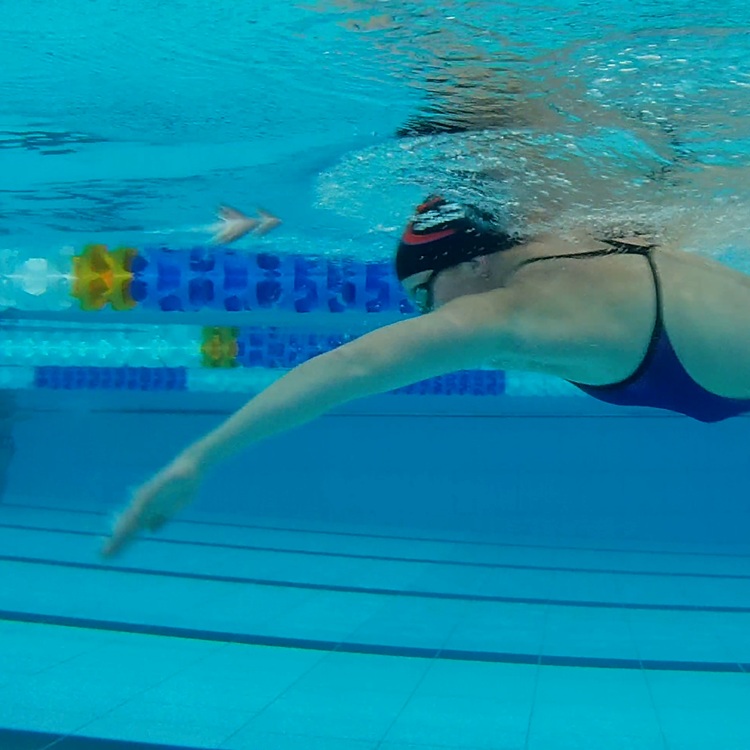
Almost every swimmer I film is surprised by what they see. What you feel you're doing and what you're actually doing in the water are usually two very different things. You think your legs are high — they're dragging. You think your hand enters in line with your shoulder — it's crossing the middle of your head. You think you're exhaling underwater — you're holding your breath until you turn.
You can't fix what you can't see. Underwater video is the single quickest way to get an honest picture of your swim technique, and once you've seen it, you can't unsee it. One athlete on our Mallorca camp put it simply: the video sessions let him see the faults in his swimming through professional analysis. That's the point. It turns vague "work on your swim technique" into two or three specific jobs.
 3. Your body position is costing you more than your fitness can make up
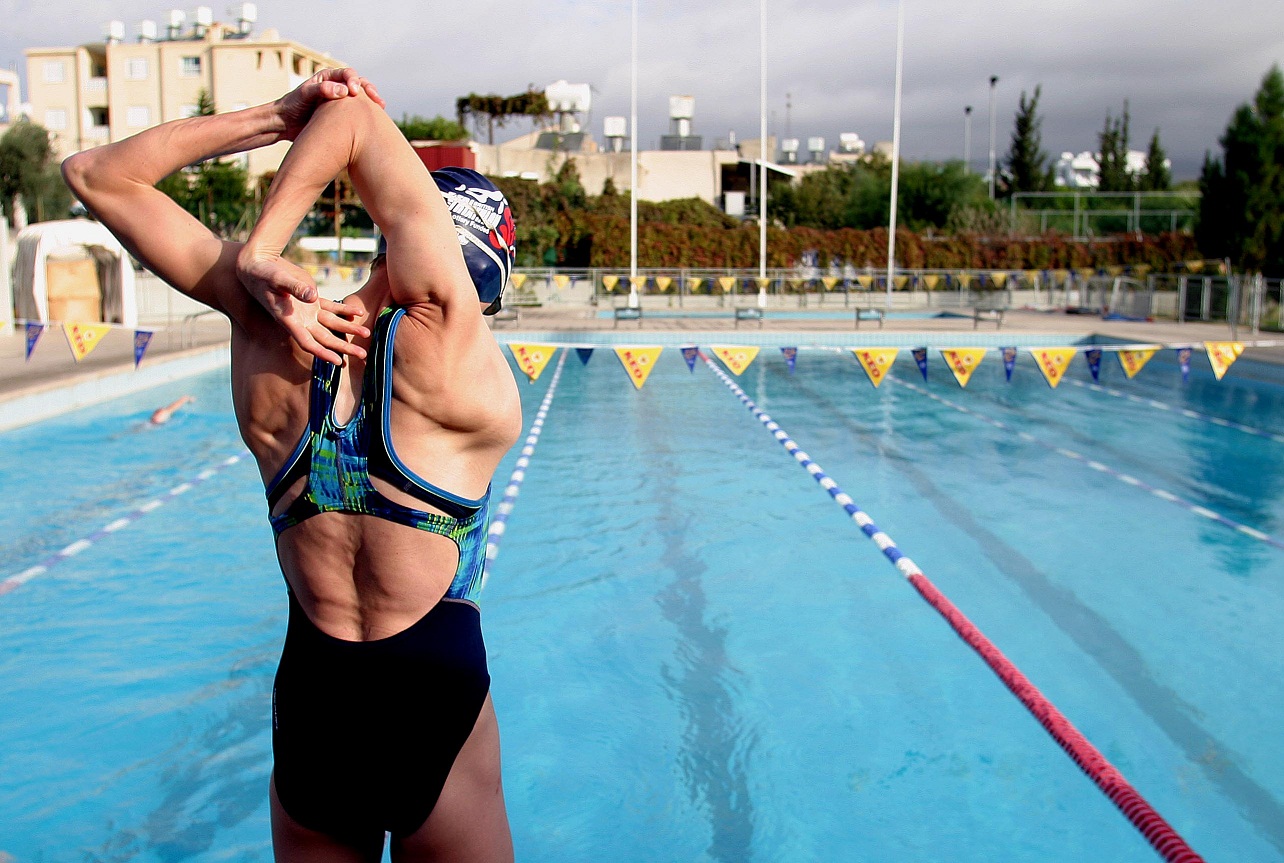
If your hips and legs are sinking, you're effectively towing an anchor up and down the pool. It's the most common swim technique fault I see in adult-onset swimmers and triathletes who came from running or cycling.
The usual causes:
- Head too high. Looking forward to the end of the pool lifts your head and drops your hips. Look down at the black line, with the back of your head just breaking the surface.
- Kicking from the knee. A big, bent-knee kick creates drag and sinks your legs. The kick should come from the hip, compact and relaxed, with ankles loose.
- Tension. Runners especially tend to swim tense. A tight body sits lower in the water.
Fix your body position and you'll often find speed you didn't know you had — without getting any fitter.
4. Your breathing is fighting your stroke
Breathing is where most strokes fall apart. The classic problems:
- Lifting the head to breathe instead of rotating with the body. Lift your head and your hips drop, so every breath slows you down.
- Holding your breath underwater. If you're not exhaling steadily while your face is in, you have to breathe out and in during that tiny window when you turn. You rush it, you snatch half a breath, and within a few lengths you're out of puff and blaming your fitness.
- Only breathing to one side. Not a crime, but it often goes hand in hand with a lopsided stroke and a crossover on the non-breathing side. Being able to breathe both ways also matters in open water, when the swell or the sun is on your favourite side.
A useful check: if you feel out of breath in the pool long before your legs or heart rate tell you you're working hard, it's almost certainly a breathing problem in your swim technique, not a fitness one.
5. You're slipping water at the front of the stroke
The catch is the moment your hand and forearm "grab" the water at the front of the stroke. Get it wrong and your hand slips straight through without moving you forward. The most common versions:
- Dropped elbow — pushing down with a straight arm, or leading with the elbow, so you press the water down instead of back.
- Crossover — your hand entering across the middle line, which makes you snake down the pool.
- Rushing the catch — pulling before your arm is set, usually because you're trying to turn your arms over faster to go quicker.
Spinning your arms faster with a poor catch is like revving a car with the clutch slipping. Lots of noise, not much movement.
6. Every session is the same pace
Plenty of triathletes get in, swim continuously at the same comfortable-but-a-bit-hard effort, and get out. It feels productive. It isn't. Your body adapts to that one pace quickly, and then nothing changes.
Structure your sessions. A good winter swim week has swim technique work done fresh at the start of a session, some easy aerobic swimming, and some properly harder efforts with rest — so you learn to hold good form when you're tired, which is exactly what happens in the second half of an IRONMAN swim.
7. You swim too far, too rarely
For adults learning or relearning swim technique, frequency beats distance every time. Three 40-minute sessions will do far more for your stroke than one 2-hour slog at the weekend. Swimming is a skill, and skills are built by touching them often, while you're fresh enough to do them properly.
Once the fatigue sets in, your stroke falls back into its old pattern. Long sessions with tired, sloppy technique just reinforce the faults from point one.
How to fix your swim technique this winter
The dark months are the best time of year to fix your swim. There's no racing to worry about, the pool's indoors, and you've got a clear run to spring. Here's how I'd use it:
- Get filmed first. Before you change anything, find out what you're actually doing. Above and below the water.
- Pick two or three fixes. No more. Prioritise whatever is costing you the most. For most triathletes that's body position or breathing before anything at the front of the stroke.
- Work on one thing at a time. Each session has one technical focus. Drills with a purpose, then swim with that focus, then swim again and check it holds.
- Swim three times a week if you can. Shorter and more often beats longer and less often.
- Keep the easy swimming easy and the hard efforts properly hard — with enough rest to hold your form.
- Re-check in the spring. Film again before the open water season starts, see what's changed, and set the next jobs.
A simple winter swim technique session (about 45 minutes)
- Warm-up: 300m easy, mixing freestyle and backstroke
- Drills: 6 x 50m on your current focus (e.g. side-kick with head down for body position, or catch-up for timing), 20 seconds rest
- Apply it: 6 x 100m steady freestyle, thinking only about that one focus, 20 seconds rest
- Harder efforts: 8 x 50m at a strong effort, 30 seconds rest — hold your form, stop the rep if it falls apart
- Cool-down: 200m easy
Total: around 1,900m. Nothing heroic. But every length has a job.
 From the pool to open water
A winter of swim technique work in the pool is only half the job. Open water adds sighting, swimming in a straight line without a black line, other swimmers, chop and cold. The good news is that a better stroke makes all of those easier — a high body position and relaxed breathing are exactly what you need when the water gets lumpy.
If you're racing in 2027, a sensible timeline looks like this:
- December–January: get your stroke analysed and set your two or three priorities
- January–March: structured pool block, frequency over distance
- April: warm-weather camp with pool and sea swimming to put it all together and re-check your stroke on video
- May onwards: open water sessions, sighting practice, race-specific swimming
 1-2-1 swim technique analysis: December and January dates now open

I've just released new 1-2-1 swim analysis sessions for December and January in Morpeth, Northumberland. It's a 60-minute session where I film you above and below the water, sit down with you poolside and show you exactly what's happening in your stroke, then get you back in the water to start fixing the two or three things that matter most. You go home with your videos and the analysis to keep coming back to all winter.
It doesn't matter whether you're learning freestyle for the first time or trying to move up the field at IRONMAN — the session is built around where your stroke is now. As Theresa put it after hers: "I was seriously anxious before the session but I didn't need to be."
Book your December or January swim analysis session
And if you want to see how far your stroke has come by spring, our Mallorca Triathlon Training Camp 2027 (17–24 April, Colonia de Sant Jordi) includes daily sessions in a 50m outdoor pool, sea swims straight off the coast, and underwater video analysis with me. It's the perfect checkpoint between a winter of pool work and your first open water swims of the season. Places are on triathlontrainingcamps.com.
Frequently asked questions
Why am I not getting faster at swimming even though I train a lot?
Because swimming speed is mostly down to swim technique, not fitness. If your stroke has faults — sinking legs, a lifted head when breathing, a dropped elbow or a crossover — more training just reinforces them. Getting your stroke filmed and fixing two or three priorities will make more difference than adding distance.
How long does it take to get faster at swimming as an adult?
Most adult triathletes who fix a major fault see a noticeable change within 6–8 weeks of consistent, focused sessions, and a real step forward over a full winter block of 3–4 months. The key is frequency — three shorter sessions a week will move you on faster than one long one.
How many times a week should a triathlete swim?
Three sessions a week is the sweet spot for most age-group triathletes who want to improve. Two will maintain your swim; three will move it forward. If time is tight, keep sessions short (30–45 minutes) rather than dropping one.
Is a swim technique video analysis worth it?
For most triathletes, yes — it's the quickest way to find out what's actually holding you back. What you feel you're doing and what you're doing underwater are usually very different. A good analysis gives you two or three clear priorities and the drills to fix them, so every session after it has a purpose.
Should I use a pull buoy and paddles to get faster?
They're useful tools, but they can hide problems. A pull buoy props your legs up, so it masks poor body position rather than fixing it, and paddles can strain your shoulders if your catch is poor. Use them sparingly and with a specific purpose, once the basics of your swim technique are sound.
Can I improve my swimming without a coach?
You can, especially if you film yourself and are honest about what you see. But most triathletes find it hard to diagnose their own stroke or to know which fault to fix first. Even one session with a coach can save you a winter of swimming in circles.
Related Reading
Why a Coached Training Camp Changes the Game
Anyone can book a week in the sun and ride their bike. What moves you forward is having a coach watching you do it.
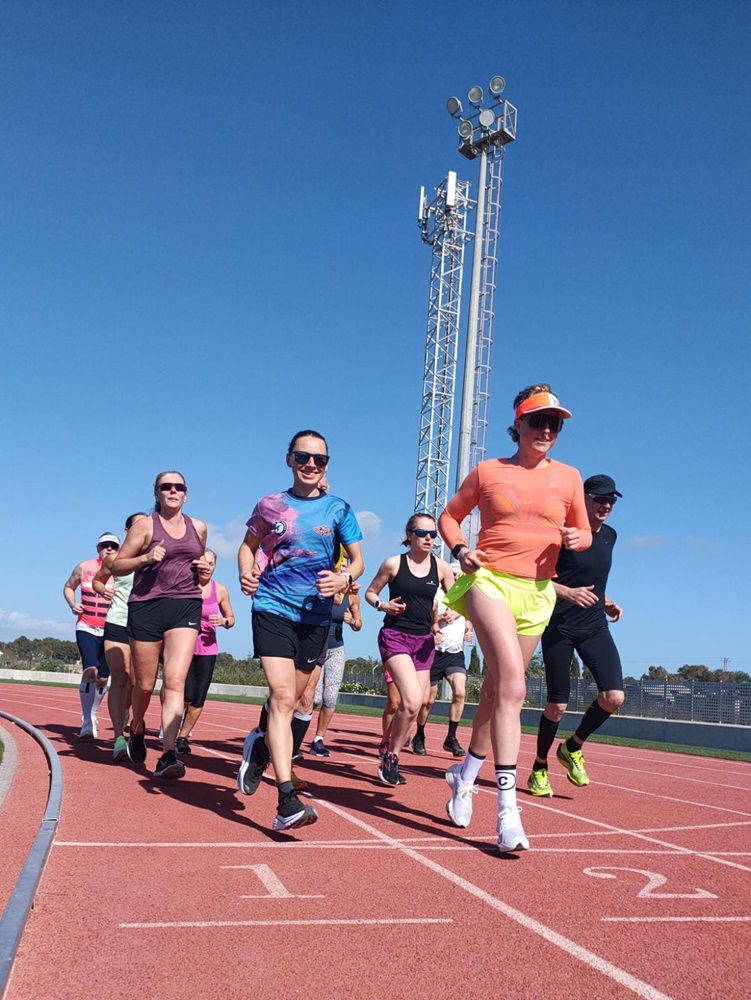
That's what you're paying for on our camp. The week starts with bike skills and swim video analysis, so we know exactly what each athlete needs to work on before the real training begins. From there, every session is coached: poolside feedback as you swim, individual work on the faults the video picked up, guidance on the climbs and descents, and transition practice until it's second nature. Every drill has a clear purpose, and you'll be told why you're doing it. We pick the two or three changes that will make the biggest difference to you, rather than burying you in everything that could be better.
It works for mixed abilities too, because the coaching is aimed at the individual and not the group:
"The coaching team were always approachable and made me feel as if I was getting 1 to 1 coaching at all times even though it was a mixed ability group, they explained why I was struggling in certain areas and how to correct it with every drill having a clear objective."
Add warm weather, quality open water swimming, proper hills and no distractions from work, and you get a week of coached training that's almost impossible to replicate solo through a British winter. You go home fitter, and you go home knowing what to work on and how to fix it.
Our next Mallorca training camp runs 17–24 April 2027 in Colonia de Sant Jordi, from £1,099pp, with a £250 deposit to secure your place. Timed right after a winter of proper base building, it's the ideal springboard into race season for anyone building towards a 2027 IRONMAN.
Where Coaching Makes the Difference
I've spent over 20 years coaching triathletes, and the plans that work aren't generic ones pulled off a shelf. My job is to help people achieve the impossible — their goals, their ambitions — whether that's getting to a first triathlon finish line or chasing a Kona qualification, built around training that fits real life: family first, work second, training third, and still gets you to the start line in the shape of your life.
I'm a British Triathlon Level 3 and IRONMAN Certified Coach, also holding Triathlon Australia Performance Coach and Certified Biomechanics Coach credentials — so whatever stage you're at, the plan in front of you is built on what actually works, not what looks good on paper.
Start Now, Not in March
If 2027 is your IRONMAN year, the work starts now — not when the weather turns. Get in touch about 1-2-1 coaching with F4L, or secure your place on the 2027 Mallorca training camp and give your off-season a proper finish line of its own.