 Short answer: Most first-timers can finish an IRONMAN on an average of 8–12 hours of training a week, building to 13–16 hours in the biggest weeks about two months out from race day. Experienced age-groupers chasing a time usually average 12–16 hours. What matters more than your weekly IRONMAN training hours is how consistently you hit them, week after week, for 9–12 months, without breaking down or wrecking your work and family life.
Right now a lot of people are entering 2027 races, then typing the same question into Google: how many hours a week do I actually need? You'll see answers anywhere from "7 hours" to "25 hours". Both can be true. Neither helps you much on its own.
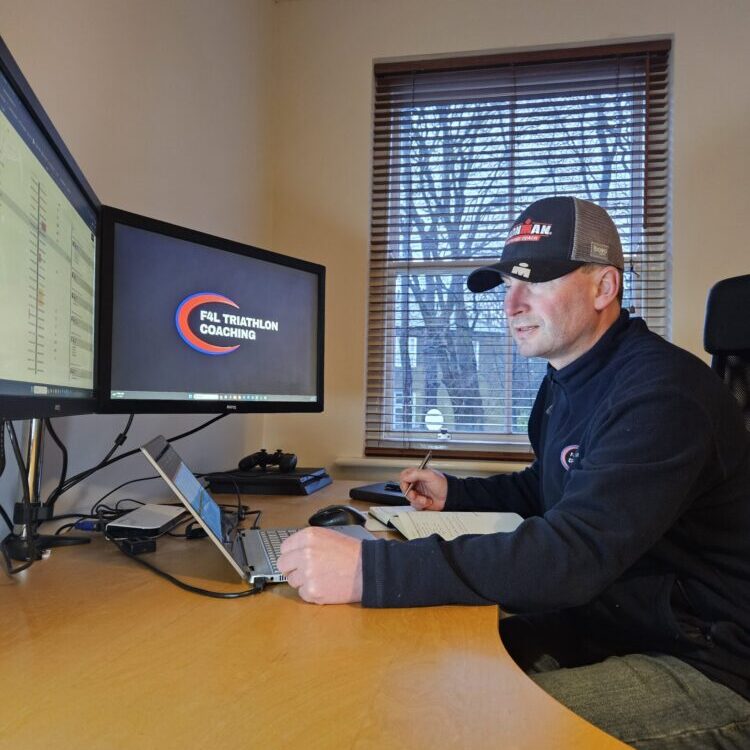
I've coached triathletes for over 20 years, and most of the people I coach have full-time jobs and families. Here's the honest version.
How many IRONMAN training hours do you need a week?
These are the ranges I'd use for a typical age-grouper. They're averages across a whole build, not what you do every single week.
| Athlete | Average week | Biggest weeks | Realistic goal |
|---|---|---|---|
| First IRONMAN, goal is to finish | 8–12 hours | 13–15 hours | Finish strong, inside the cut-off |
| Experienced, chasing a PB | 11–14 hours | 15–18 hours | Faster time, well-paced marathon |
| Competitive age-grouper | 14–18 hours | 18–22 hours | Podium or World Championship slot |
For context, IRONMAN is a 3.8km swim, 180km bike and 42.2km run, with a 17-hour cut-off at most races (check your own race's rules on the official IRONMAN website). Most first-timers finish somewhere between 12 and 16 hours. You don't need to train like a pro to do that. You need to train like someone who's still turning up in June.
Why more IRONMAN training hours isn't automatically better
Every year I speak to athletes who did 18–20 hours a week, arrived on the start line exhausted, and walked the marathon. I also see people on 10 hours a week run the whole way. The difference is rarely the hours. It's usually one of these:
- Consistency. Ten hours every week for 40 weeks beats 16 hours for six weeks followed by a cold, a niggle and a fortnight off.
- Intensity. Most self-coached athletes ride their easy sessions too hard and their hard sessions too easy. Everything ends up in the grey middle zone, which is tiring but doesn't build much.
- Recovery. Training is the stimulus. Sleep, food and rest are where the fitness is actually built. Six hours' sleep and 16 hours of training is a bad deal.
- Life stress. A hard week at work counts. Your body doesn't care whether the stress came from intervals or a deadline.
That's why I wrote why doing less makes you a better triathlete. Most F4L athletes end up training fewer hours than they did on their own, and racing faster.
How your IRONMAN training hours should change through the year
Your weekly IRONMAN training hours shouldn't be flat. For a summer 2027 race, a sensible build looks roughly like this:
- November–January (base): 7–10 hours. Easy aerobic work, swim technique, strength, and turbo sessions on dark evenings. This is where the foundations go in. More on that in IRONMAN off-season training.
- February–April (build): 9–13 hours. Longer rides, more structured bike and run sessions, open water when it's warm enough. A spring training camp fits brilliantly here.
- May–June (race-specific): 12–16 hours, with the longest rides and brick sessions. Every third or fourth week is lighter so your body can absorb the work.
- Final 2–3 weeks (taper): volume drops by 40–60%. Intensity stays, fatigue goes.
If you're starting in November, you're in a great position. You don't need big IRONMAN training hours yet. You need routine.
How to split your IRONMAN training hours across swim, bike and run
As a rough guide for a 10-hour week:
- Swim: 2–2.5 hours (3 sessions). Technique first. If the swim worries you, fixing your stroke saves more time and energy than extra lengths.
- Bike: 4.5–5 hours (2–3 sessions, including one long ride). The bike is the longest part of the day, and it sets up your run.
- Run: 2–2.5 hours (3 sessions). Frequent and mostly easy. Running is where injuries happen, so build it slowly.
- Strength and mobility: 40–60 minutes (2 short sessions). Small time cost, big injury-prevention payoff.
Shift workers, parents and anyone with a long commute will need to move these around. That's normal. A good plan bends around your week.
What a 10-hour IRONMAN week can look like
- Monday: Rest or 30 minutes of strength
- Tuesday: Swim 60 min (technique and steady sets) + easy run 40 min
- Wednesday: Turbo 75 min with structured intervals
- Thursday: Swim 45 min + strength 30 min
- Friday: Easy run 45 min
- Saturday: Long ride 2.5–3 hours, steady
- Sunday: Long run 60–75 min, or swim 45 min + short run
Nothing heroic. Ten IRONMAN training hours like this, repeated week after week with your rest days protected, will surprise you with what they build by summer.
Signs you're doing too many IRONMAN training hours
- Your easy pace or easy power is getting slower, not faster
- Your resting heart rate is up and your sleep is poor
- You catch every cold going
- Small niggles keep appearing in different places
- You dread sessions you used to enjoy
- Your family has started asking when this will be over
If two or three of these sound familiar, cut back for a week. That isn't weakness. It's how you get to race day.
 Making your IRONMAN training hours fit a busy life
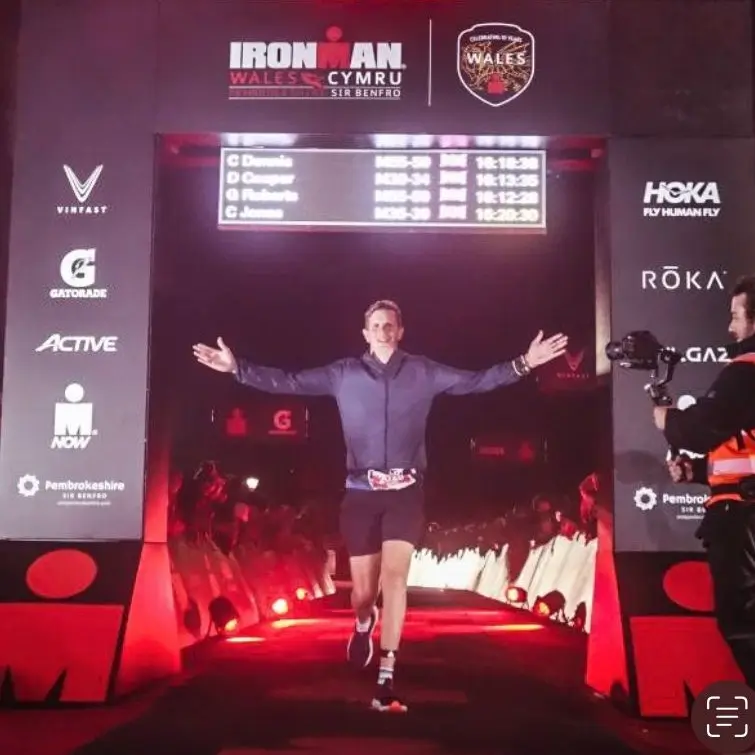
This is the real challenge, and it's the part most plans ignore. Family first, work second, training third is how most of my athletes live. A few things that help:
- Plan the week on Sunday, with whoever you share your life with. Agree the long sessions first.
- Use the commute. Running or cycling to work turns dead time into training.
- Go early. Sessions done before 7am rarely get cancelled.
- Keep a back-up. If the 75-minute turbo becomes 40 minutes, keep the main set and drop the rest.
- Log it in an online training diary so you can see trends in your hours, sleep and fatigue rather than guessing.
If you'd like someone to build your IRONMAN training hours around your actual week, adjust them when life happens, and tell you honestly when to back off, that's exactly what F4L coaching does. It's from £125 a month, with direct access to me throughout your build.
Where a training camp fits in
One week of focused training in the sun can be worth a month of squeezing sessions around work in the dark. A spring camp in your build phase gives you a big, controlled block of IRONMAN training hours, coaching on technique, and the chance to ride long without a cold, wet British road in sight.
Our Mallorca Triathlon Training Camp 2027 runs 17–24 April in Colonia de Sant Jordi. It's perfectly timed for a summer IRONMAN, with a 1:8 coach-to-athlete ratio so the training is pitched at your level, not the fastest person in the group. You can also find out more at triathlontrainingcamps.com.
Frequently asked questions
How many hours a week do I need to train for my first IRONMAN?
Most first-timers finish comfortably on an average of 8–12 hours a week across a 9–12 month build, peaking at around 13–15 hours in the biggest weeks about two months before the race. Consistency over many months matters more than any single big week.
Can you train for an IRONMAN on 10 hours a week?
Yes. Plenty of age-groupers complete an IRONMAN on an average of around 10 hours a week, as long as the training is consistent, mostly aerobic, includes a long ride and long run each week, and is built over 9–12 months. Peak weeks will need to be longer.
How long does it take to train for an IRONMAN?
For a first IRONMAN, allow 9–12 months if you already swim, bike and run regularly, and longer if you're new to triathlon. That gives time to build aerobic fitness and fix swim technique over winter before race-specific training in spring.
How should I split my IRONMAN training hours between swim, bike and run?
A common split is around 20–25% swim, 45–50% bike and 25% run, plus two short strength sessions a week. Weaker swimmers often benefit from more technique-focused swim time, and injury-prone runners from more frequent, shorter runs.
Is 20 hours a week too much for IRONMAN training?
For most age-groupers with jobs and families, yes. 20-hour weeks are usually only sustainable for experienced, competitive athletes with plenty of recovery time. Most people get better results from 10–15 consistent hours than from 20 hours that lead to illness, injury or burnout.
Does a triathlon coach help with fitting in IRONMAN training hours?
Yes. A coach builds your weekly hours around your actual availability, adjusts the plan when work, family or illness gets in the way, and makes sure each session has a purpose, so you get more fitness from fewer hours.
Paul Jones is Head Coach of F4L Triathlon Coaching, a British Triathlon Level 3 Coach and IRONMAN Certified Coach with over 20 years' experience. Read more about Paul.
Related Reading
Why a Coached Training Camp Changes the Game
Anyone can book a week in the sun and ride their bike. What moves you forward is having a coach watching you do it.
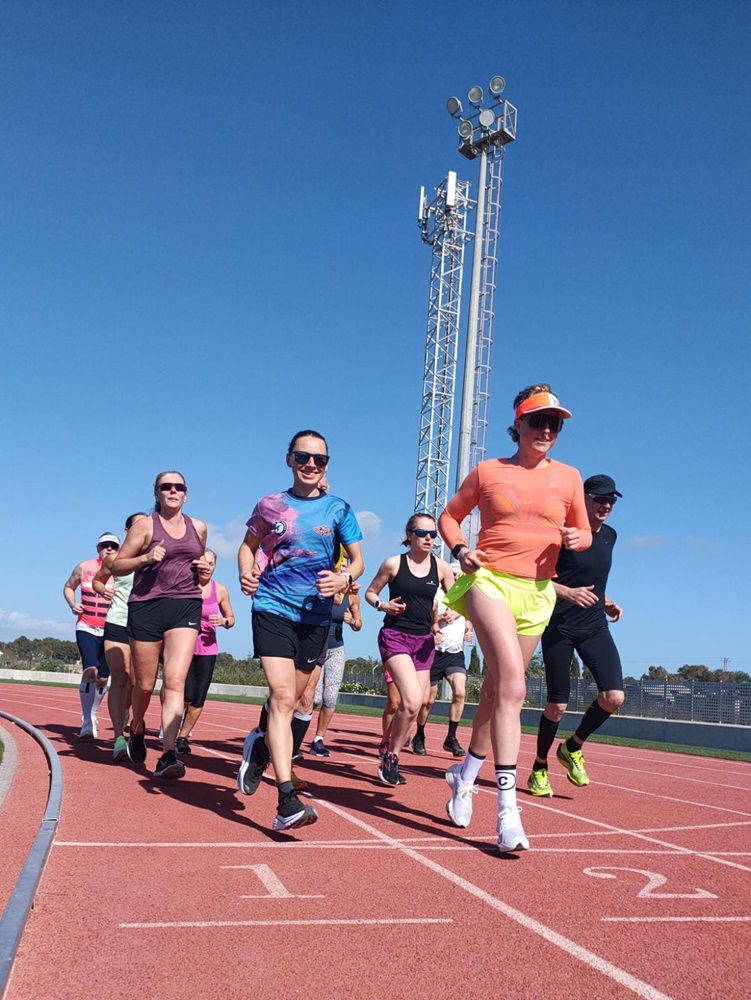
That's what you're paying for on our camp. The week starts with bike skills and swim video analysis, so we know exactly what each athlete needs to work on before the real training begins. From there, every session is coached: poolside feedback as you swim, individual work on the faults the video picked up, guidance on the climbs and descents, and transition practice until it's second nature. Every drill has a clear purpose, and you'll be told why you're doing it. We pick the two or three changes that will make the biggest difference to you, rather than burying you in everything that could be better.
It works for mixed abilities too, because the coaching is aimed at the individual and not the group:
"The coaching team were always approachable and made me feel as if I was getting 1 to 1 coaching at all times even though it was a mixed ability group, they explained why I was struggling in certain areas and how to correct it with every drill having a clear objective."
Add warm weather, quality open water swimming, proper hills and no distractions from work, and you get a week of coached training that's almost impossible to replicate solo through a British winter. You go home fitter, and you go home knowing what to work on and how to fix it.
Our next Mallorca training camp runs 17–24 April 2027 in Colonia de Sant Jordi, from £1,099pp, with a £250 deposit to secure your place. Timed right after a winter of proper base building, it's the ideal springboard into race season for anyone building towards a 2027 IRONMAN.
Where Coaching Makes the Difference
I've spent over 20 years coaching triathletes, and the plans that work aren't generic ones pulled off a shelf. My job is to help people achieve the impossible — their goals, their ambitions — whether that's getting to a first triathlon finish line or chasing a Kona qualification, built around training that fits real life: family first, work second, training third, and still gets you to the start line in the shape of your life.
I'm a British Triathlon Level 3 and IRONMAN Certified Coach, also holding Triathlon Australia Performance Coach and Certified Biomechanics Coach credentials — so whatever stage you're at, the plan in front of you is built on what actually works, not what looks good on paper.
Start Now, Not in March
If 2027 is your IRONMAN year, the work starts now — not when the weather turns. Get in touch about 1-2-1 coaching with F4L, or secure your place on the 2027 Mallorca training camp and give your off-season a proper finish line of its own.